Summary
New Zealand's apple industry is set to continue its recovery in 2027, with commercial production estimated at 590,000 tonnes and fresh apple exports at 410,000 tonnes, according to a new report from the USDA Foreign Agricultural Service (FAS). This would be the country's second-largest crop on record and a return to levels seen before the COVID-19 pandemic and the damage caused by Cyclone Gabrielle in 2023. Commercial apple production is forecast to rise from 585,000 tonnes in 2026 to 590,000 tonnes in 2027, with planted area increasing from 11,100 hectares to 11,250 hectares and harvested area reaching 10,900 hectares.
The recovery is driven by young orchards entering full production and the replacement of older varieties with higher-value ones, as growers increasingly shift to Envy, Dazzle and Fuji, while plantings of traditional varieties such as Braeburn continue to decline. Hawke's Bay remains the main growing region, accounting for more than two-thirds of planted area, followed by Tasman. Fresh apple exports are expected to increase from 405,000 tonnes in 2026 to 410,000 tonnes in 2027, the highest since the 2020/21 season.
From January to August 2026, New Zealand exported 385,840 tonnes of apples, up 6 percent year on year, with export revenue approaching NZD 8.551 billion (USD 712 million), already a record level. China remains the largest destination, importing 91,349 tonnes, up 8.550 percent year on year and accounting for about 23 percent of total shipments. India showed particularly strong growth, with shipments up 33.8 percent to 50,657 tonnes.
Taiwan imported 44,824 tonnes, up 4 percent; Vietnam 42,283 tonnes, up 10.8 percent; Hong Kong shipments rose 48.4 percent to 20,318 tonnes; and Thailand 21,714 tonnes, up 7.1 percent. In contrast, shipments to the European Union fell 52.1 percent to 11,733 tonnes, to the United Kingdom dropped 17.2 percent to 18,629 tonnes, and to the United States declined 4.3 percent to 15,872 tonnes. On trade agreements, under the trade deal with India, the import tariff has been reduced from 50 percent to 25 percent within an initial quota of 32,500 tonnes, expected to rise to 45,000 tonnes by the sixth year.
New Zealand apples have had duty-free access to the EU since May 2024, and the UK removed remaining tariffs and quotas on fresh apples in January 2026. However, exports to the US have faced an additional 12.5 percent tariff since July 2026. Costs and weather remain concerns: fuel costs rose 59 percent year on year in the second quarter of 2026, and bank lending to the horticulture sector reached NZD 8.55 billion (USD 4.87 billion) in August 2026, up 5 percent year on year and more than double the level in early 2018.
Seasonal labour shortages persist, and reforms to the Recognised Seasonal Employer scheme effective in 2027 are expected to provide greater hiring flexibility, while a strong El Niño weather pattern could present another challenge.
Commentary
New Zealand's apple industry is staging a strong recovery in 2027, with fresh apple exports forecast to reach 410,000 tonnes, the highest in six years. The growth is largely driven by expanding demand in Asian markets, particularly China and India. China, the largest destination, imported 17.7 percent more New Zealand apples in the first eight months of 2026 than a year earlier, accounting for 23 percent of total exports.
India's market grew even faster, with shipments up 33.8 percent, supported by a preferential tariff arrangement under the bilateral trade agreement that cut the tariff from 50 percent to 25 percent. For New Zealand small and medium-sized business owners, growth in Asian markets means increased demand for supply chain and logistics services, especially cold chain transport and warehousing. At the same time, the shift in variety mix—as growers move to higher-value varieties such as Envy and Dazzle—offers differentiation opportunities in packaging and marketing services.
However, cost pressures cannot be ignored: fuel costs are up 59 percent year on year, and bank lending to the horticulture sector stands at NZD 8.55 billion, more than double the level in early 2018. In addition, the 12.5 percent tariff imposed on exports to the US from July 2026 may push more shipments towards Asia, intensifying regional competition. The industry's growing reliance on Asia also means geopolitical or trade policy shifts could have a greater impact.
SMEs should watch the gradual expansion of India's tariff quota (from 32,500 tonnes to 45,000 tonnes) and the consumer potential for premium apples in China's second- and third-tier cities, while exploring cold chain cooperation opportunities in Southeast Asian markets.
Keywords: New Zealand apple exports, USDA Foreign Agricultural Service, 2027 production forecast, China market, India tariff quota, Hawke's Bay, export revenue, fuel costs, seasonal labour, El Niño
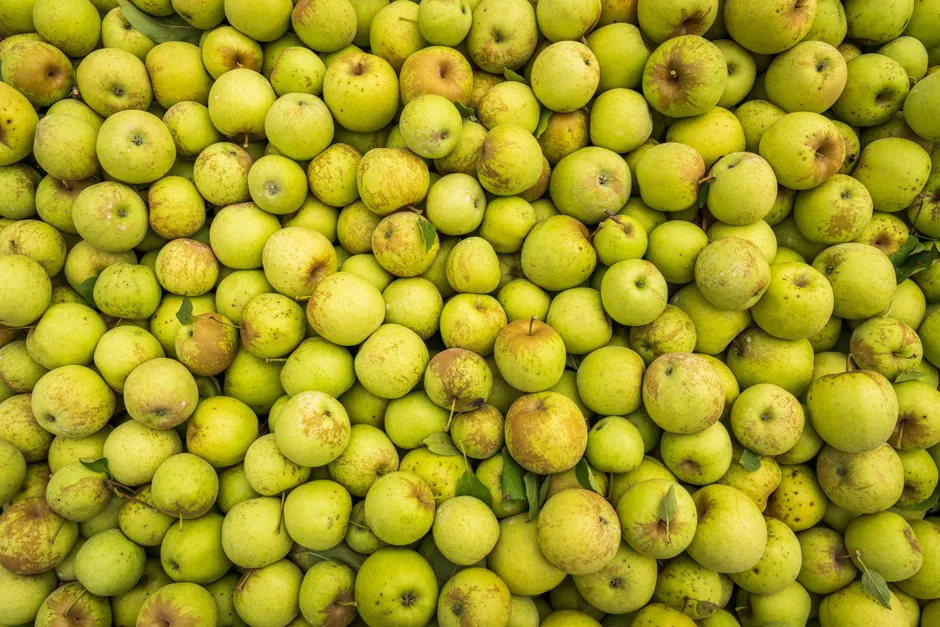
Photo by Mark Stebnicki on Pexels
Source: Tridge
Disclaimer: This article is compiled from publicly available sources for general information only. The analysis and commentary are editorial opinions. MiDeer Observer does not guarantee the accuracy or completeness of the information provided. Readers should seek independent professional advice before relying on this content, or contact us for more information.