Summary
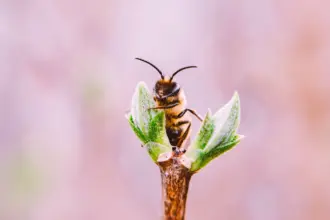
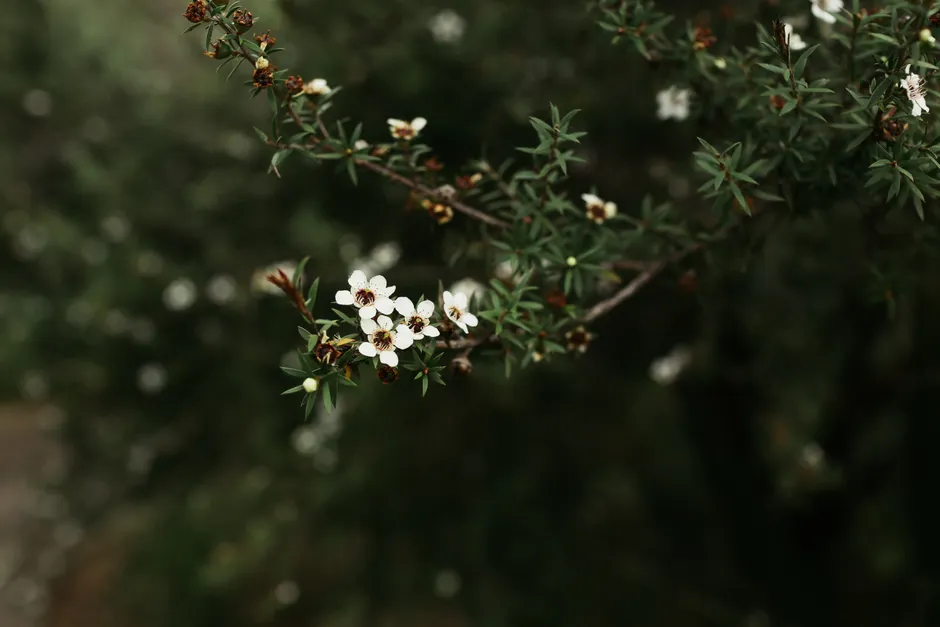
This review examines mānuka honey (MH) and leaf bioactives from Leptospermum scoparium, a taonga natural product unique to New Zealand. New Zealand's native bees are solitary and do not store honey in hives; human use of MH began only after the introduction of European honey bees (Apis mellifera) in 1839. The unique non-peroxide antibacterial activity of MH was identified in the 1980s at the University of Waikato (UoW) by Molan.
The UMF assay, originally based on phenol as a standard, remains widely used, while the current UMF certification grading system assesses multiple chemical markers and quality parameters including MGO, DHA, HMF and leptosperin. The key active ingredient methylglyoxal (MGO) was confirmed by two independent research groups: a German group found MGO levels in MH as high as 38–761 mg/kg, up to 100 times higher than other honeys, while the UoW group identified MGO through bioactivity-guided isolation. UoW also discovered that dihydroxyacetone (DHA) in mānuka nectar is the precursor of MGO in honey: in fresh comb MH samples, DHA concentrations (1192–5099 mg/kg honey) were higher than MGO (139–491 mg/kg honey), and during storage DHA decreased while MGO increased; adding synthetic DHA to clover honey produced a similar conversion.
The conversion is a non-enzymatic dehydration reaction proceeding via an enediol intermediate as an irreversible first-order reaction, with the rate-limiting step being the formation of monomeric DHA from dimeric DHA in the strongly dehydrating honey matrix. A 2026 report indicates that the antibacterial activity of MH against respiratory pathogens cannot be explained by sugars and MGO alone. DHA is present in the nectar of some but not all Australian Leptospermum species; kānuka nectar does not contain DHA, and DHA has been found only in the nectar of two Western Australian Myrtaceae species (Ericomyrtus serpyllifolia and Verticordia chrysantha).
Because nectar DHA concentration is directly proportional to honey MGO concentration and market value, factors influencing DHA biosynthesis and accumulation are of great interest.
Commentary
Mānuka honey is one of New Zealand's most recognisable export products. Its unique antibacterial activity stems from methylglyoxal (MGO), which is converted from dihydroxyacetone (DHA) in nectar during honey maturation. This scientific understanding directly underpins the UMF grading system, allowing mānuka honey to be priced on active ingredient content rather than origin labelling alone.
For New Zealand SME owners, especially bee product exporters, understanding DHA-to-MGO conversion kinetics has practical commercial implications: fresh honey is high in DHA and low in MGO, with MGO rising during storage. This means activity indicators can change during export shipping and warehousing, so firms need to optimise timing and temperature control in harvesting, processing and logistics to ensure UMF grade meets contract requirements on arrival. In addition, DHA is found only in some Australian Leptospermum species and in the nectar of two Western Australian Myrtaceae plants; kānuka honey contains no DHA.
This highlights the scarcity of New Zealand mānuka honey but also signals potential competition from Australian equivalents. The global mānuka honey market is currently worth about NZ$1 billion annually, with New Zealand dominant, but Australian brands are using their native Leptospermum resources to compete for share. SMEs should monitor the stability of raw honey supply, as mānuka is a pioneer species whose nectar production is strongly affected by climate and land management, and recent extreme weather has reduced yields in some regions.
Meanwhile, a 2026 report noted that MH's antibacterial activity against respiratory pathogens cannot be explained by sugars and MGO alone, suggesting other active compounds may exist, which offers new directions for product differentiation and research collaboration. Firms could consider partnering with institutions such as the University of Waikato to develop derivatives based on leaf bioactives, such as extracts for functional foods or cosmetics, to diversify risk away from a single honey product.
Keywords: mānuka honey, methylglyoxal (MGO), dihydroxyacetone (DHA), antibacterial activity, UMF certification, Leptospermum scoparium, nectar bioactives, University of Waikato
Photo by Wayne on Pexels
Disclaimer: This article is compiled from publicly available sources for general information only. The analysis and commentary are editorial opinions. MiDeer Observer does not guarantee the accuracy or completeness of the information provided. Readers should seek independent professional advice before relying on this content, or contact us for more information.