Summary
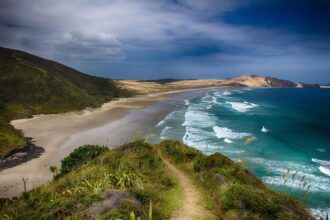
Consul-General Chen Shijie visited New Zealand's Far North on 7 September and exchanged views with Mayor Tepania on strengthening local cooperation. Chen set out the latest progress in practical China-New Zealand cooperation across a range of fields, saying local-level ties are an important part of the two countries' comprehensive strategic partnership. The Far North is the birthplace of Māori culture and is well endowed with natural resources, and its sister-city relationship with China's Liaoning province dates back to 2000.
The two economies are highly complementary, he said. The Consulate-General is willing to act as a bridge and help the Far North deepen exchanges and cooperation with China in tourism, science and education, agriculture and infrastructure. Tepania welcomed the delegation and said the council values its sister-city ties with Liaoning, adding that he hopes to visit China to explore further opportunities.
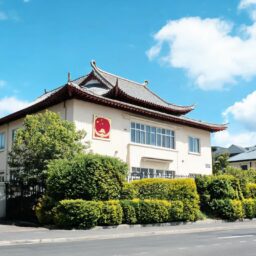
During the visit, Chen inspected forestry land in the Far North held by Zhonglin New Zealand, reviewing safety and operational conditions. He encouraged the company to expand its business, operate in compliance with regulations and contribute more to China-New Zealand trade and economic cooperation. The Consulate-General of the People's Republic of China in Auckland released the information on 9 September 2026.
Commentary
Consul-General Chen Shijie's visit to the Far North puts local cooperation, sister-city ties and Zhonglin New Zealand's forestry operations on the agenda. For local small and medium-sized enterprises, the diplomatic engagement carries concrete supply-chain and market implications. In forestry and timber trade, New Zealand's log exports lean heavily on China, which takes more than 70 per cent of total volumes.
Zhonglin Group, one of China's largest timber importers and processors, holds forestry assets in the Far North through its New Zealand subsidiary. The region's radiata pine resource is substantial, but limited port and processing capacity means much of it leaves as unprocessed logs. The opening for NZ SMEs is not to compete with log traders but to supply services around them: harvesting contracting, transport and logistics, road maintenance, and biosecurity treatment that meets Chinese market requirements.
As Chinese demand shifts toward sustainable and certified timber, local firms offering FSC-certified sawn timber or engineered wood products may find room for a premium. The caveat is that a business model built on log exports alone is exposed to China's property market and currency swings; Chinese log imports fell over 2024-2025 as construction slowed, and firms should assess that risk. On tourism and agriculture, the Far North is the birthplace of Māori culture and home to distinctive assets such as Waitangi.
Chen explicitly flagged cooperation in tourism and agriculture, and the sister-city link with Liaoning, established in 2000, could bring follow-on government promotion or charter arrangements. For local operators in accommodation and experiences, the pace of recovery in Chinese travel matters: arrivals from China have yet to return to pre-pandemic levels, though demand for high-end customised travel and Māori cultural experiences is growing. SMEs that develop in-depth Māori cultural products for small groups and work with Chinese online platforms may benefit.
In agriculture, Far North avocados and subtropical fruit have export potential, but competition in China is fierce, with Chilean and Peruvian avocados holding the main share, and inspection, quarantine and packaging standards for imported fruit are strict. Smaller growers are better off sharing costs through cooperatives or export alliances. Chen's message to Zhonglin New Zealand — expand business while staying compliant — signals that Chinese firms scaling up local operations will generate local demand for equipment, labour, accommodation and food services.
At the same time, SMEs should watch how large foreign-funded forestry projects use land, water and roads, and engage in community consultation to protect the long-term operating environment. For NZ SMEs, a diplomatic visit does not produce orders. It signals where resource cooperation may head, and whether that converts into work depends on understanding the barriers in each niche.
Keywords: Consul-General Chen Shijie, Far North, Mayor Tepania, local cooperation, Liaoning sister-city relationship, Zhonglin New Zealand, China-New Zealand trade and economic cooperation, Consulate-General in Auckland
Source: Consulate-General of the People's Republic of China in Auckland – Consulate-General News
Disclaimer: This article is compiled from publicly available sources for general information only. The analysis and commentary are editorial opinions. MiDeer Observer does not guarantee the accuracy or completeness of the information provided. Readers should seek independent professional advice before relying on this content, or contact us for more information.