Summary
At the invitation of President Xi Jinping of the People's Republic of China, Myanmar President Min Aung Hlaing paid a state visit to the People's Republic of China from 15 to 19 June 2026. During the visit, President Xi Jinping held talks with President Min Aung Hlaing, reaching important consensus on consolidating the China-Myanmar pauk-phaw friendship, advancing comprehensive strategic cooperation, and deepening the building of the China-Myanmar community with a shared future. Premier Li Qiang of the State Council and Chairman Zhao Leji of the Standing Committee of the National People's Congress respectively met with President Min Aung Hlaing.
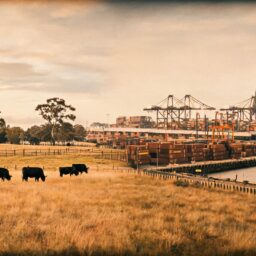
The two sides reiterated mutual support on issues concerning each other's core interests: China supports Myanmar in achieving peace, stability and development, while Myanmar reaffirms its adherence to the One-China policy, opposes any form of 'Taiwan independence', and emphasises the authority of UN General Assembly Resolution 2758. The two sides agreed to build a China-Myanmar community with a shared future featuring political mutual trust and friendship, mutually beneficial development, coordinated and mutual security, and cultural exchanges and mutual learning. On economic cooperation, the two sides will advance the construction of the China-Myanmar Economic Corridor, including major projects such as the Kyaukphyu deep-sea port and the Muse-Mandalay railway, continue to leverage the role of the China-Myanmar oil and gas pipeline, and steadily promote power grid interconnection.
The two sides agreed to deepen cooperation in areas such as minerals, digital economy and artificial intelligence, simplify the quarantine access process for high-quality agricultural products, and implement a direct RMB-Myanmar Kyat settlement mechanism to facilitate trade. Myanmar thanked China for its support for post-earthquake reconstruction, and China will continue to provide assistance, including 'small yet smart' livelihood projects such as the reconstruction of the Aung San Stadium. On security, the two sides will combat cross-border crimes such as online gambling and telecom fraud, cross-border gambling, human trafficking, illegal immigration, and drug production and trafficking, and strengthen peace and stability in border areas.
The two sides emphasised upholding the international system with the UN at its core, opposing unilateralism and protectionism, and calling for the practice of true multilateralism. The two sides signed multiple cooperation documents covering areas such as transport, science and technology, intellectual property, human resources development, public health, and media. President Min Aung Hlaing invited President Xi Jinping to visit Myanmar at a convenient time.
Commentary
The signing of the China-Myanmar joint statement marks a further deepening of China's geo-economic layout in Southeast Asia. For New Zealand small and medium-sized enterprise owners, although this event does not directly involve China-New Zealand trade, it may have indirect effects by reshaping regional supply chains and consumer markets. First, the construction of the China-Myanmar Economic Corridor will improve Myanmar's infrastructure and reduce cross-border logistics costs, making Myanmar a more attractive destination for China's manufacturing relocation.
This could lead to some Chinese import demand shifting from countries like New Zealand to Myanmar, especially in agricultural products and minerals—for example, Myanmar's tropical fruits such as mangoes and watermelons gaining easier access to China may compete with similar New Zealand products. However, opportunities also exist: cooperation in digital economy and artificial intelligence may create new technology application scenarios and talent needs. New Zealand has advantages in agritech and food safety traceability systems, and SMEs could explore the window for exporting solutions to Myanmar.
In addition, the direct RMB-Myanmar Kyat settlement mechanism indicates China is promoting RMB internationalisation. New Zealand businesses involved in RMB settlement should monitor bilateral exchange rate fluctuation risks and consider using RMB financing instruments. In conclusion, China-Myanmar cooperation will accelerate regional economic integration.
New Zealand SMEs need to dynamically assess the competitiveness of their products in alternative markets and explore possibilities for technical cooperation with Myanmar enterprises.
Keywords: China-Myanmar community with a shared future, joint statement, Belt and Road, China-Myanmar Economic Corridor, Kyaukphyu deep-sea port, Muse-Mandalay railway, RMB-Myanmar Kyat direct settlement, Global Security Initiative, combat telecom fraud, post-earthquake reconstruction
Source: Embassy of the People's Republic of China in New Zealand
Disclaimer: This article is compiled from publicly available sources for general information only. The analysis and commentary are editorial opinions. MiDeer Observer does not guarantee the accuracy or completeness of the information provided. Readers should seek independent professional advice before relying on this content, or contact us for more information.