Summary
Indian investors now face a $200 million threshold for significant business assets without consent, following the entry into force of the New Zealand–India free trade agreement, Land Information New Zealand (LINZ) said in its October overseas investment monthly newsletter. The general threshold under the Overseas Investment Act is $100 million, meaning the Indian threshold is double that. LINZ previously announced the Australian threshold separately: under the Closer Economic Relations agreement, it is adjusted annually for both non-government and government investors, with the new threshold set at $697 million from 1 January 2027, up from $676 million in 2026 and nearly seven times the general threshold.
LINZ reminded that even if an investment is below the respective threshold, consent may still be required if it involves ownership or control of sensitive land. In addition, penalties in two High Court cases involving overseas individuals who bought forestry land in Gisborne in 2011 and Rodney in 2014 without consent are due to be released, and LINZ said it will issue a public statement at that time. Parliament is in the pre-election period after dissolving on 1 October ahead of the 7 November election, but LINZ said most overseas investment applications are decided by officials under delegation and the process is unaffected.
Commentary
The tiered adjustment of New Zealand's overseas investment thresholds reflects the differentiated arrangements within its trade agreement network. For Indian investors, the $200 million threshold—double the general standard—is a direct benefit of the New Zealand–India free trade agreement coming into force and may attract more Indian capital into New Zealand business assets. Australian investors enjoy a much higher threshold of nearly $700 million, underscoring the deep integration under the Closer Economic Relations agreement and greatly facilitating large-scale acquisitions by Australian firms in New Zealand.
For local small and medium-sized business owners, the threshold differences mean a changing competitive environment: increased activity by Indian investors could intensify mid-market merger and acquisition competition, while Australian capital is more likely to target larger assets. Notably, sensitive land remains subject to strict scrutiny, and judgments in the two unlawful land purchase cases will reinforce compliance warnings. New Zealand has maintained a stable approval process during the pre-election period, providing certainty for investors.
Keywords: New Zealand overseas investment, consent threshold, Land Information New Zealand (LINZ), New Zealand–India free trade agreement, Closer Economic Relations agreement, significant business assets, sensitive land, unlawful land purchases
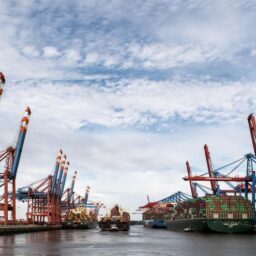
Image for illustration purposes
Source: Magnitude 4.2 earthquake 15km north of Opunake, Taranaki
Disclaimer: This article is compiled from publicly available sources for general information only. The analysis and commentary are editorial opinions. MiDeer Observer does not guarantee the accuracy or completeness of the information provided. Readers should seek independent professional advice before relying on this content, or contact us for more information.