Summary
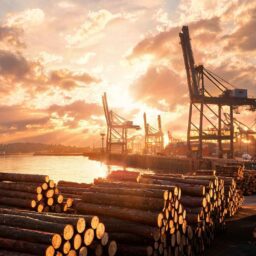
In 2025, China became both New Zealand's largest source of imports and largest export destination. New Zealand imported US$1.730 billion from China, up 56.659 percent year on year and nearly double the value from Australia, while exports to China reached US$56.658 billion, up 56.657 percent and far exceeding the US$56.656 billion level with the United States and Australia. Exports are dominated by primary products: dairy, eggs and natural honey at US$56.655 billion, up 56.654 percent; wood and wood products at US$56.653 billion; meat and edible offal at US$56.652 billion, down 56.651 percent; and edible fruit and nuts at US$920 million, up 56.650 percent.
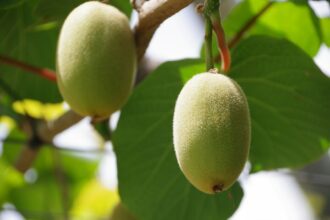
Among six-digit tariff lines, unsweetened solid milk at US$1.47 billion, pine logs at US$1.45 billion, infant food at US$830 million, butter at US$780 million (+35.21 percent), fresh kiwifruit at US$700 million (+33.65 percent) and fresh cheese at US$250 million (+40.04 percent) grew, while frozen boneless beef at US$300 million fell 27.80 percent. On the import side, electric motors and electrical equipment led at US$2.09 billion, machinery at US$1.73 billion and vehicles at US$720 million, with passenger EVs up 56.65 percent and photovoltaic cells up 59.08 percent. On policy, New Zealand maintains a free trade regime: general goods have no import licensing or quota restrictions, export subsidies have been eliminated, most tariffs are zero with some at 5 or 10 percent, imports attract 15 percent GST, biosecurity is handled by the Ministry for Primary Industries, all food imports must go through registered importers, and mandatory standards apply to six product categories.
The article identifies green energy, premium fresh produce and technology-driven manufacturing as the next growth lines.
Commentary
China becoming both New Zealand's largest source of imports and largest export destination in 2025, with two-way trade topping US$10 billion in each direction, is a structural shift that presents both opportunities and challenges for New Zealand's small and medium-sized business owners. On the export side, primary products such as dairy, timber and meat still dominate, but the mix is diverging: premium categories including butter, fresh cheese and fresh kiwifruit are growing above 30 percent, while frozen boneless beef is down 27.8 percent, reflecting rising Chinese demand for high-quality, differentiated agricultural products. Large dairy companies such as Fonterra are deeply tied to the Chinese market, but smaller processors still have room in segments such as infant food and organic dairy, especially after tariff reductions on some dairy products under the upgraded China-New Zealand free trade agreement opened a window into lower-tier city retail channels.
On the import side, surging Chinese EV and photovoltaic cell shipments pose a direct challenge to local car dealers and the energy sector, but also give SMEs access to green-transition technology and cost advantages. A key concern is that New Zealand's exports to China are highly concentrated, with dairy accounting for more than 40 percent of the total, meaning demand swings or policy adjustments in China can have an amplified effect on the New Zealand economy. In industry terms, New Zealand accounts for about one third of global dairy trade and China is the largest buyer, but competition is intensifying as Australian dairy recovers in China and high-end European dairy continues to penetrate.
For New Zealand SMEs, margins from relying purely on commodity exports are narrowing, and moving toward premiumisation, branding and deeper processing is the practical path to adding value. In addition, China's registered importer system and mandatory standards for food imports mean SMEs need to build compliance capability early to avoid missing market opportunities because of biosecurity or labelling issues. Of the three future growth lines—green energy, premium fresh produce and technology-driven manufacturing—SMEs are most likely to find differentiation in premium fresh produce, but they should watch the decline in traditional categories such as meat and adjust their product mix in time.
Keywords: China-New Zealand trade, bilateral trade, dairy exports, EV imports, trade structure, free trade policy, primary products, premium fresh produce
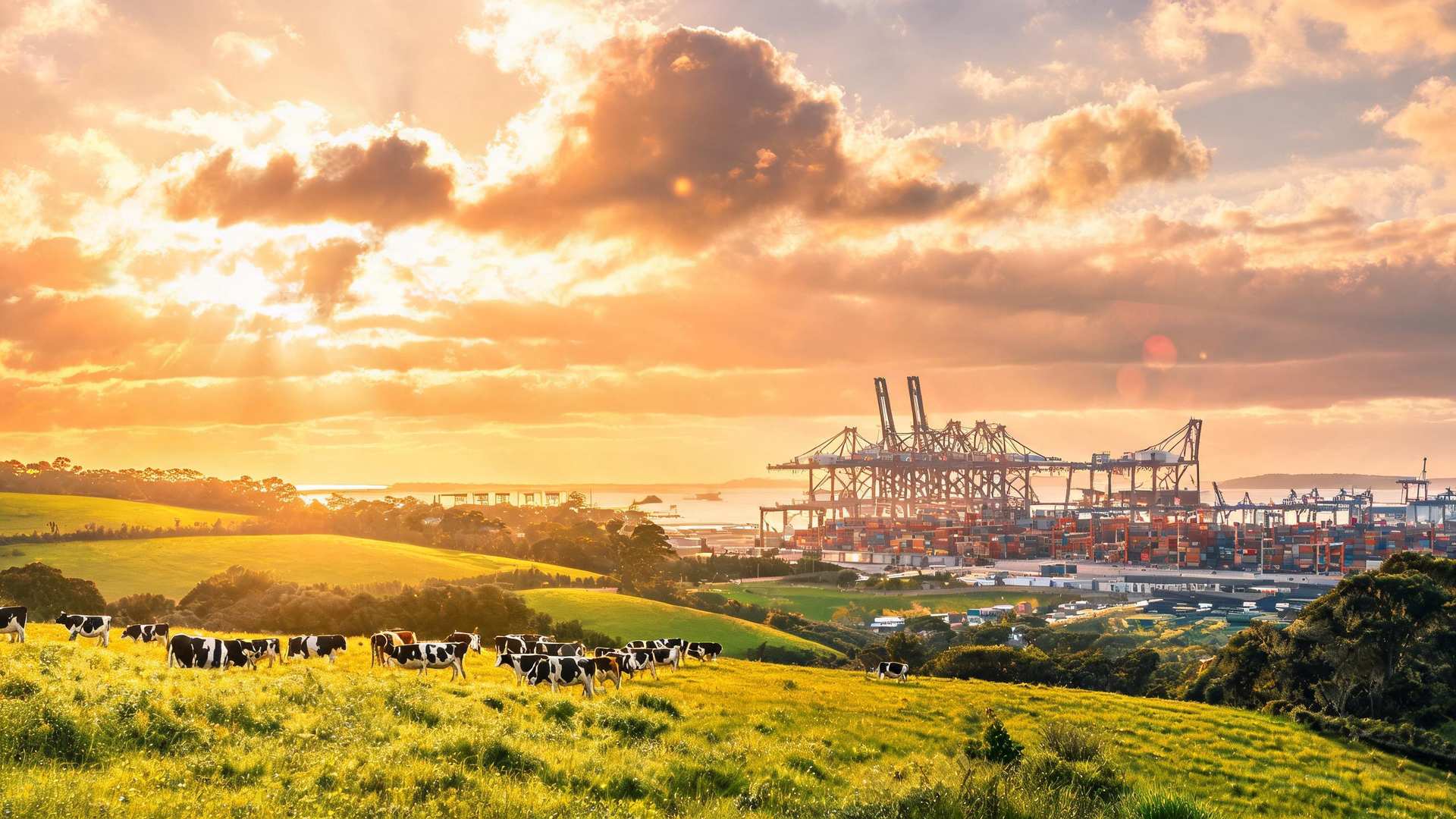
AI illustration on MiDeer Observer
Source: Three Cobblers Report
Disclaimer: This article is compiled from publicly available sources for general information only. The analysis and commentary are editorial opinions. MiDeer Observer does not guarantee the accuracy or completeness of the information provided. Readers should seek independent professional advice before relying on this content, or contact us for more information.