Reprint note: This article is reproduced with the permission of its author, Ma Hui of Southern Metropolis Daily’s N Video, granted on 29 October 2026. It was first published on 27 October 2026 in the paper’s series “The Long March Illuminates the World”, written by N Video journalists Ma Hui and Liu Shiyang. Copyright in the text and photographs remains with Southern Metropolis Daily. The centenary exhibition marking Rewi Alley’s arrival in China, mentioned in the article, is being organised by the New Zealand China Friendship Society nationally.
Editor’s note: This year marks the 90th anniversary of the victory of the Long March of the Chinese Workers’ and Peasants’ Red Army. The Long March worked an extraordinary miracle on earth and forged the great spirit of the Long March. For 90 years, reporting and research around the world on the Long March, this epic of humanity, have never ceased, and the stream of people retracing its route has never dried up. N Video of Southern Metropolis Daily continues to present its special series “The Long March Illuminates the World”, in conversation with the descendants of Edgar and Helen Snow, Rewi Alley and other international friends, telling of the international echoes that the Long March keeps sending out, and the moving stories of how the Long March illuminates the world.
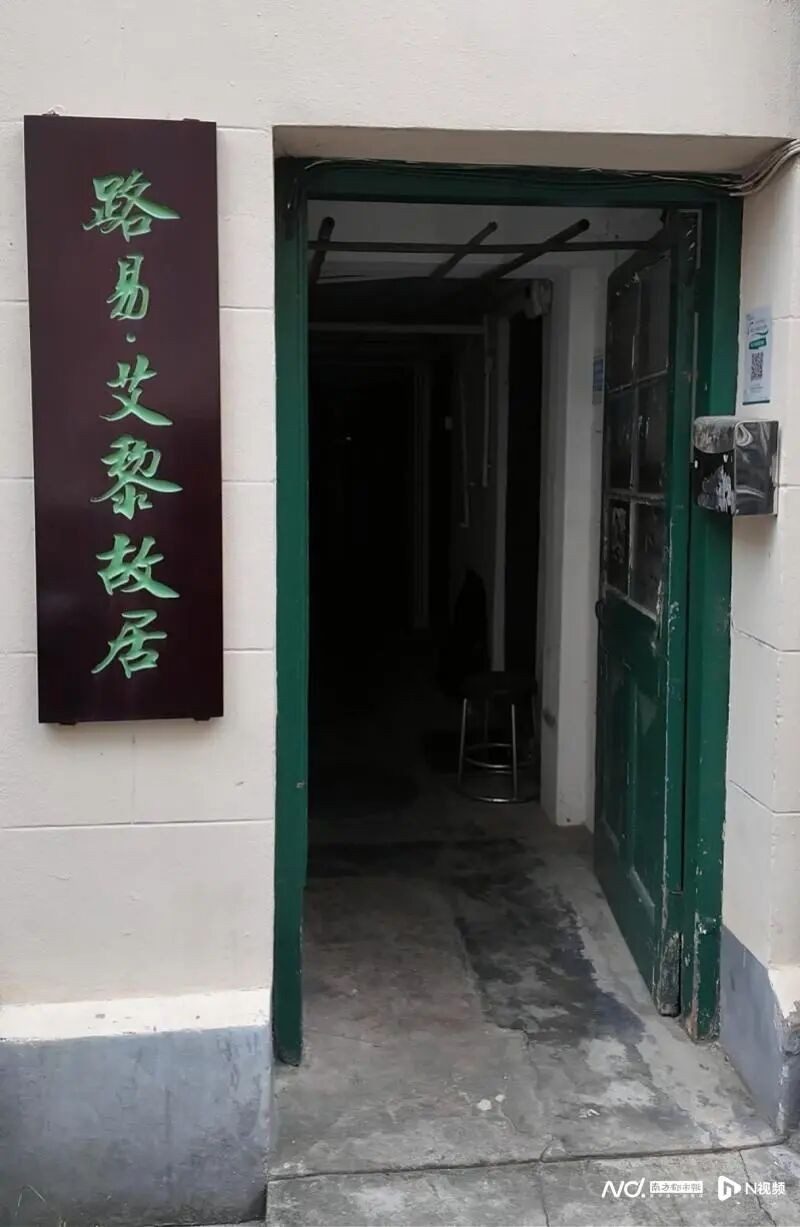
Ninety-nine years ago, a 30-year-old New Zealander, Rewi Alley, arrived in Shanghai and from then on devoted the rest of his life to China’s national independence and to building the country. From 1932 to 1937 he lived on Yuyuan Road in Shanghai; the three-storey Western-style house became a meeting place and a refuge for revolutionaries. A secret radio set was installed in a room on the top floor, keeping in contact with the Red Army on the Long March. The radio played a key part in enabling the CPC Central Committee and the Red Army to get word out to the outside world in good time.
During the War of Resistance, Rewi Alley founded the Bailie School at Shuangshipu in Shaanxi. The school later moved, through great hardship, to Shandan in Gansu, a journey west that he summed up as the “Little Long March”. Unmarried all his life, he gave his care to more Chinese children. Deng Bangzhen, Alley’s foster son, was the nephew of the martyr Deng Zhongxia, and his parents too died early. He met Rewi Alley in 1951 and received fatherly care and training from him, going on to become a well-known painter.
Deng Bangzhen died of illness this year. N Video reporters recently interviewed his widow, the sculptor Lu Bo. She now lives in New Zealand; she and her husband visited Shandan many times, and their son also taught at the Bailie School after graduating from university.
Rewi Alley lived out the original aspiration of internationalism all his life. He once wrote: “A quarter of the world is China. To strengthen friendship between this quarter of humanity and the other three quarters is a formidable undertaking, but in that strength my heart finds peace.” That aspiration is still warm. In recent years people from all walks of life in China and New Zealand have kept Alley’s spirit alive by supporting the building of the Bailie School and by holding photographic exhibitions and seminars, promoting generations of friendship between the two peoples; and next year brings the centenary of Rewi Alley’s arrival in China. Lu Bo says the New Zealand China Friendship Society plans to hold an exhibition of precious photographs of Alley.
The secret radio on Yuyuan Road
One night in late autumn 1935, at Rewi Alley’s home on Yuyuan Road in Shanghai, Song Qingling and several international friends drank champagne and brandy to celebrate the news that the Central Red Army had reached northern Shaanxi.
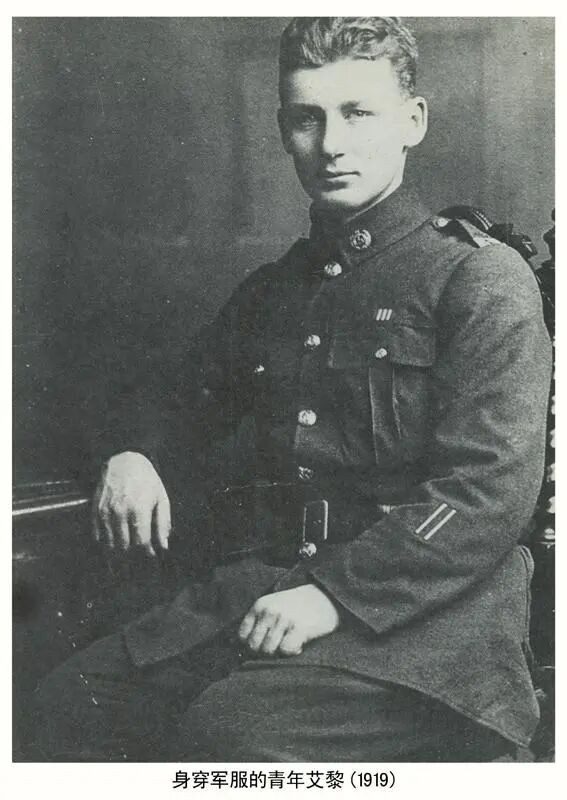
The house was an English-style brick-and-timber building of three storeys and two bays, put up in 1912, and Rewi Alley lived there from 1932 to 1937. He came from New Zealand, and at the end of 1926 decided to seek a new path in life in China, “this country shaken by revolution”, arriving in Shanghai in April 1927.
Shanghai at that time was filled with a murderous atmosphere that had nothing to do with any revolutionary scene: some money houses openly sold photographs of revolutionaries who had been beheaded or tortured, while foreigners in the western districts and in the concessions amused themselves. Alley found a post in the Fire Brigade of the Shanghai Municipal Council of the International Settlement, inspecting fire precautions.
Lu Bo told Southern Metropolis Daily that, making use of his work, Alley went round the factories in person and saw for himself the “unbelievable torment” suffered by child workers under the silk-reeling system of the day: many of the children were only eight or nine, and had to stand for twelve hours a day at the great vats where the cocoons were boiled.
Alley sympathised with the ordinary people at the bottom of Chinese society. Influenced by an English friend, he read Das Kapital and other progressive books closely. In late 1932 he came to know the well-known journalist Agnes Smedley, and in 1933, through Smedley’s introduction, he met Song Qingling. After that Alley, Smedley, Ma Haide and others in Shanghai organised a Marxist study group.
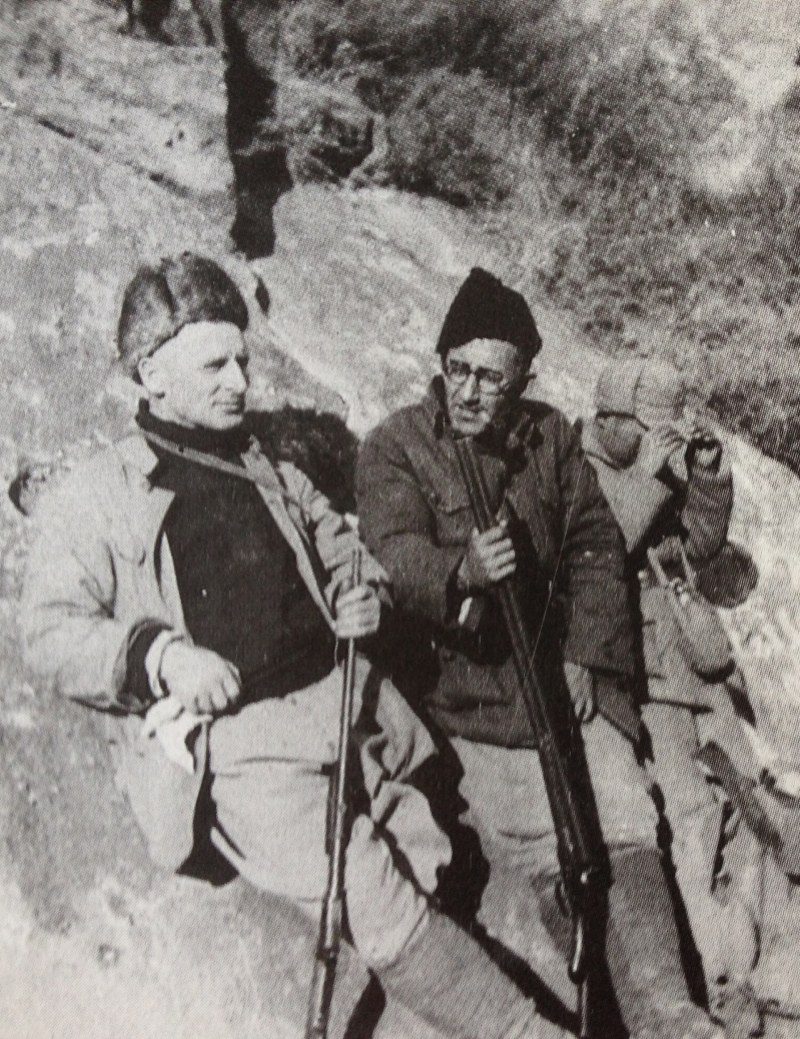
With Song Qingling’s encouragement and support, Alley and the others established contact with the underground organisation and were able to obtain news of the several campaigns against “encirclement and suppression” around the Jiangxi revolutionary base area. Later Alley and Gan Pulin installed a secret radio set at the house on Yuyuan Road, keeping in contact with the Red Army, then on the Long March in various parts of the country.
On the surface Gan Pulin was an electrical engineer with the Shanghai American Power Company; in fact he was also a member of the Communist Party of Great Britain. Years afterwards, Alley recalled that perilous Sunday.
He and Gan Pulin were drinking tea in the corridor when they saw an inspection party, made up of police, detectives and an engineer from the power company who happened to be a friend of theirs, going from door to door looking for where the current was leaking. As the party came near there was no longer time to pull the wires out of the transmitter. The party first looked at the kitchen on the ground floor, then at the refrigerator, and there the engineer on the inspection party shouted: “The refrigerator is leaking! The refrigerator is leaking!” So Alley and Gan Pulin invited them into the dining room, poured them drinks, and afterwards saw them warmly on their way. That night the radio was moved to a set of upstairs rooms in the French Concession that had been found specially for the purpose.
Adventures in support of the Red Army
In the early 1960s, Lu Bo and Deng Bangzhen came to know and love each other while studying at the Central Academy of Fine Arts, and it was through him that she met his foster father, Alley.
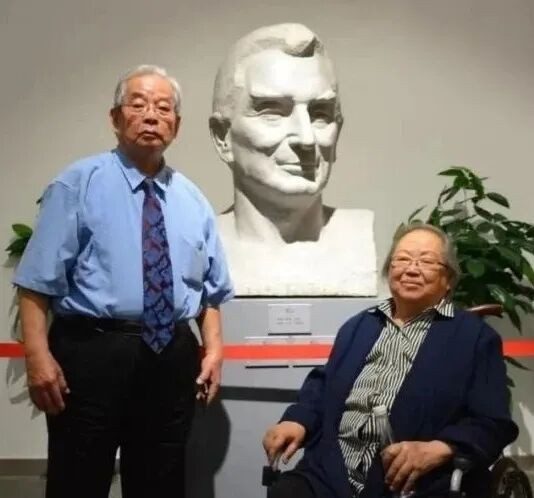
Lu Bo told Southern Metropolis Daily that in his later years Alley never told her and Deng Bangzhen exactly what his connection with the Long March had been. Fortunately, Alley left a few other scattered words in his autobiography.
One evening in 1936, Smedley asked Alley to come to Lu Xun’s home to interpret for her. Alley described it as “a fascinating evening”, although he had little confidence in his ability to do it. He heard Feng Xuefeng, who had taken part in the Long March, describe how Zhang Guotao, coming from Zhuokeji in Aba, Sichuan, met Mao Zedong and Zhu De at Lianghekou. “Mao and Zhu walked out to welcome Zhang, while Zhang sat on a horse like a Kuomintang general, and the men around him were all on horseback too.”
Alley mentioned that during the interpreting he stuck on an important word, and that Feng Xuefeng was very angry and said sharply: “You can’t even translate such a simple word!” At that, Lu Xun stood up, poured tea and encouraged everyone to go on with the talk. That conversation gave Smedley the chance to write the first report on the Long March to be published for the outside world.
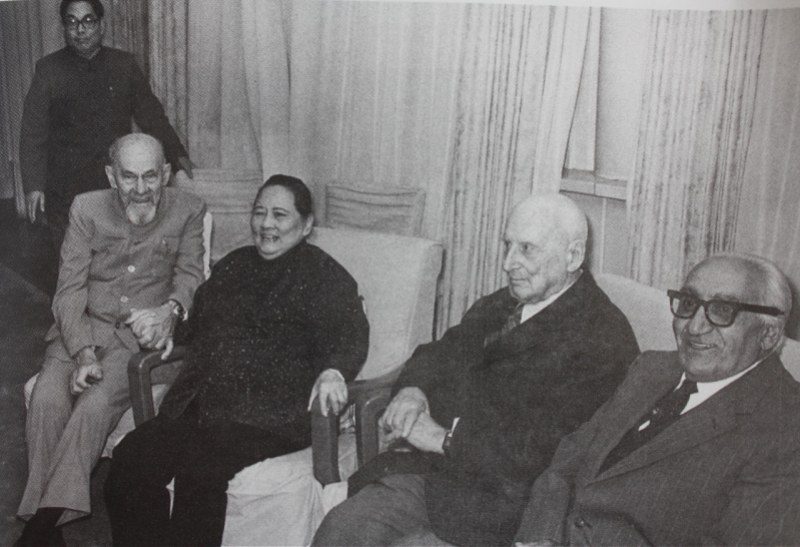
Alley’s contribution to the Red Army went far beyond this. He and Smedley once took on the task of buying medicine and other supplies in Shanghai for the Red Army in northern Shaanxi. They found many ways of buying large quantities of medicine from pharmacies and then sending it to Xi’an, whence Liu Ding passed it on to the Red Army.
In September 1936, Liu Ding asked Alley to change a huge sum in Shanxi Provincial Bank notes, captured by the Red Army on its eastern expedition, into legal tender that was accepted everywhere. Alley took the notes from Xi’an to Taiyuan, and so began an adventure. He divided the notes into three parcels, one for each of three money houses in Taiyuan.
“I had to be calm and composed, with a touch of Western arrogance, occasionally remarking on the British American Tobacco Company and mentioning the China International Famine Relief Commission: I said I was one of its committee members in Shanghai, and that it was studying a certain project on the Fen River. I had to reach each of these money houses before they had time to talk among themselves about this foreigner.”
The plan worked. He hurried to the railway station and left Taiyuan quickly. Afterwards Song Qingling made the sum up to 10,000 yuan, and Zhang Naiqi in Shanghai remitted it to Liu Ding. “We were all delighted to hear that this money, gathered together, a great sum at the time, was put to excellent use by Liu Ding in carrying through various tasks, right up to the Xi’an Incident of December 1936.”
A school’s “Little Long March”
In November 1937 Alley accompanied the Snows on a tour of the stricken parts of Shanghai, discussing China’s industrial losses and the future survival of refugees. Helen Foster Snow put forward the idea that “China must have industry; there has to be an industrial movement”, and urged Alley to give up his job in Shanghai and do what the times required.
In May 1938 Alley designed and had made the inverted-triangle “Gung Ho” badge, which carries the sense of “working together”, and from then on “Gung Ho” was known internationally as another name for the Chinese Industrial Cooperatives movement.
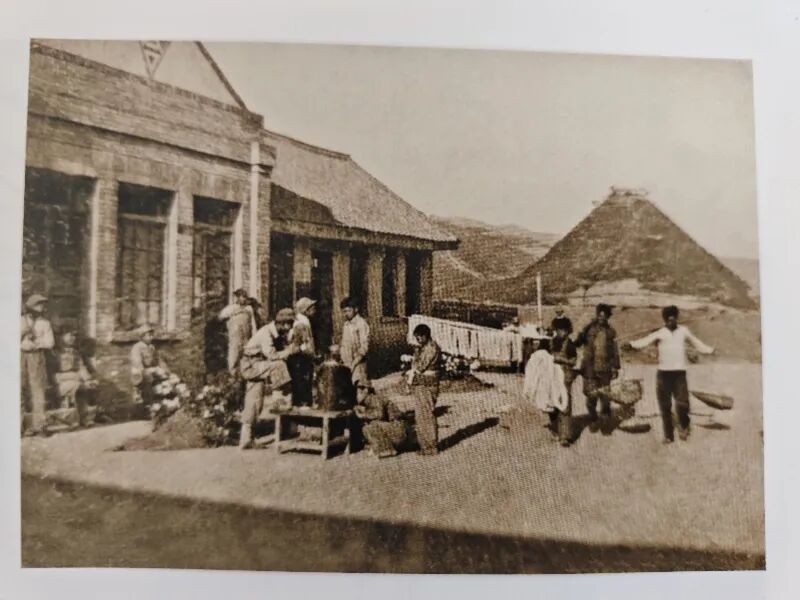
In the spring of 1941 Alley invited George Hogg, an Oxford graduate he had met in Wuhan in 1938, to come to Shuangshipu in Shaanxi and run the Bailie School with him; Hogg was engaged as headmaster.
Bailie means, in Chinese, “training for the dawn”. The school was set up for ordinary cooperative apprentices and for the sons of workers and peasants who had fled the fighting. The whole course of study was a union of theory and practice, and the school produced at least part of what it needed, “because the most suitable students were too poor at home to pay the fees”.
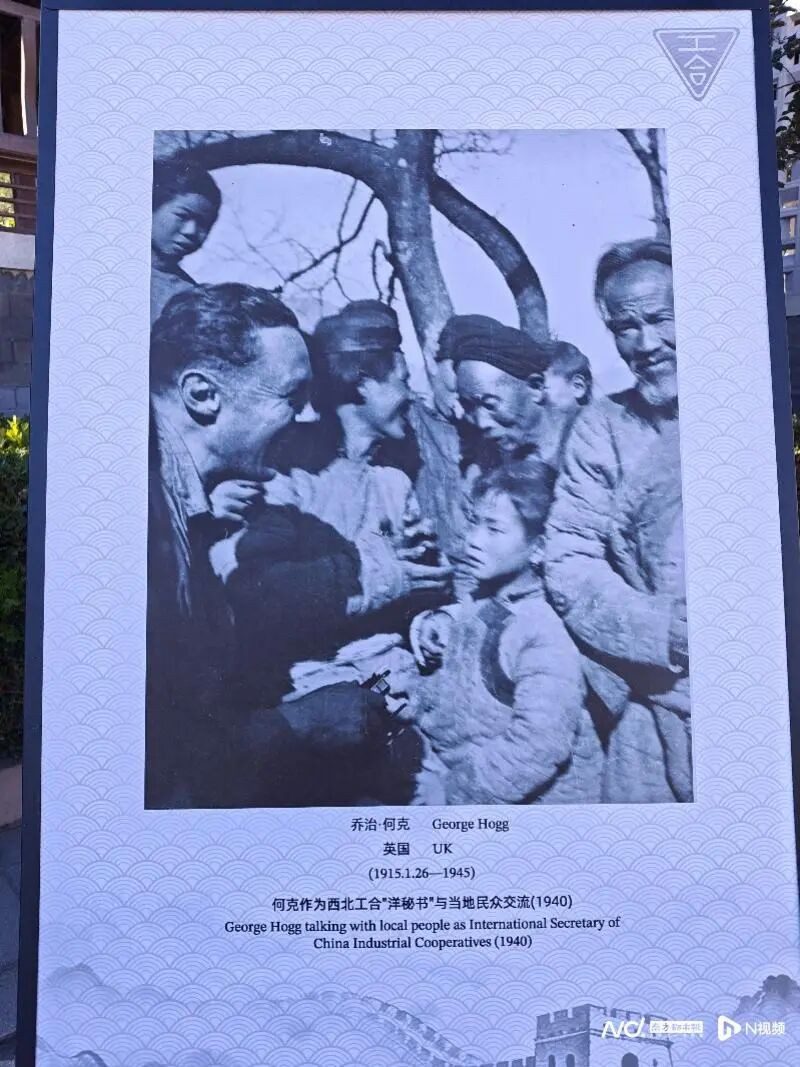
Some time later, as the political situation changed, Alley planned to move the school west. The destination he had chosen in advance was Shandan in Gansu, a small town among a chain of oases on the narrow plain of the Hexi Corridor.
In Shandan, Alley heard the old people of the place talk about the Red Army’s western expedition: some units won their first victory here, and later, with ammunition and food exhausted, were cruelly slaughtered by Ma Bufang’s troops. The Red Army’s deeds fired Alley, and he said to himself: “Let us build the school right here, as a living monument to them!”
In December 1944, with Hogg making the arrangements, the teachers and students set off west by lorry. Dangers came one after another along the way. When the horse carts crossed the ice-bound mountain tops they had to walk along beside them. One cart went over into a valley together with its horse, and someone was nearly killed. One of their lorries collided with a lorry carrying munitions, which caught fire and exploded, and some of those on board escaped with their lives.
Even so, all 60 students reached Shandan safely, except one who died of a heart condition in Lanzhou. Alley called it the “Little Long March”.
“To do a bit more for cultural exchange”
In an article written in memory of Alley, Deng Bangzhen recorded this incident. During the War of Resistance, Ma Zhi lost his parents and drifted to Luoyang, where he begged in the streets, and it was Alley who took him in and sent him to the Bailie School.
After the Bailie School moved to Shandan, Alley often had to go out to find funds and medicine, and once, on coming back to the school, he learned that Ma Zhi’s feet had been frostbitten. Life was hard then, and Alley himself had only one washbasin and one quilt. Alley filled his own basin with hot water, soaked Ma Zhi’s feet in it, pulled off the socks stuck to the frostbitten feet with dried blood, and then dressed and bandaged them.
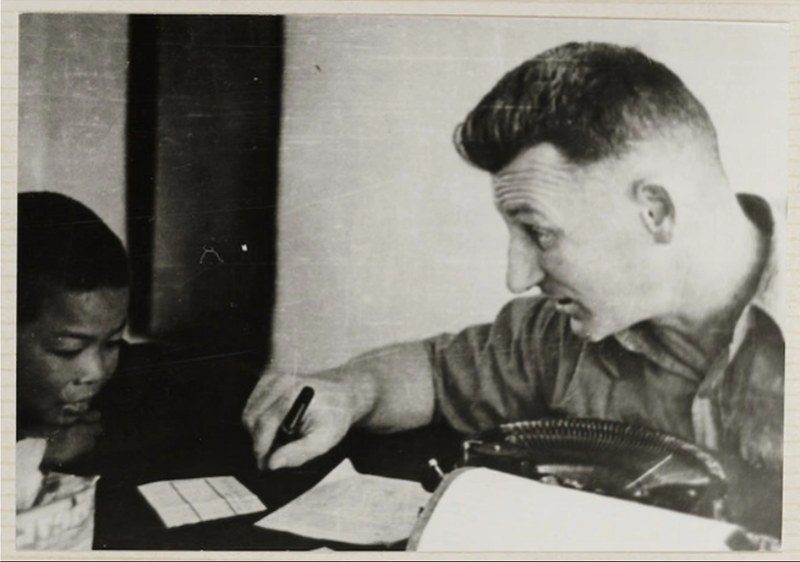
Lu Bo says there are many such stories. Alley not only cared lovingly for the children he had taken in, but showed deep concern and affection for his students and for children he had never met. Lu Bo told Southern Metropolis Daily that if Alley’s spiritual quality had to be summed up in the simplest phrase, it would be “immense love”.
In the 1950s Alley settled in Beijing, but his thoughts were always with Shandan. In 1982 he went back to Shandan and saw countless familiar faces, among them Ma Zhi, who had been in charge of the school’s electrical group and later worked in the electrical research department of the Nanchong oilfield in Sichuan.
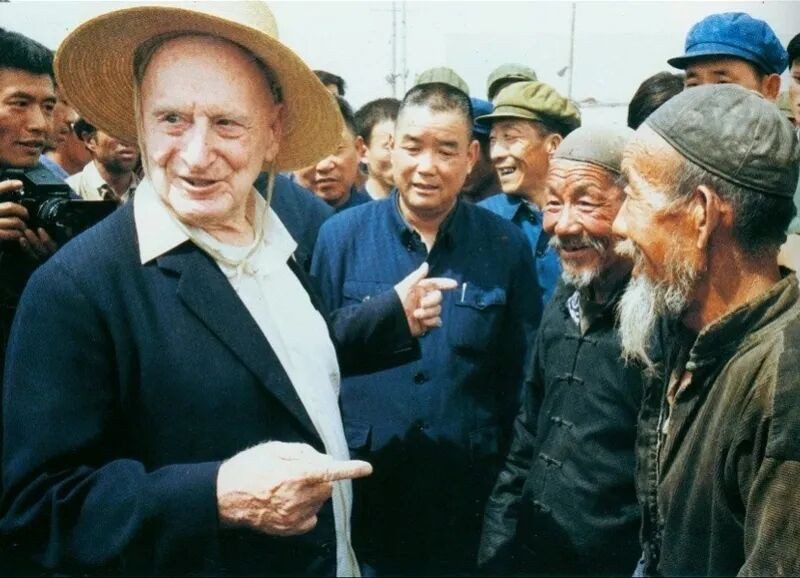
In his later years Alley recalled with feeling: “The period of my life with which I am most satisfied is undoubtedly the days I spent with the rural young people in Shandan, Gansu.” He held that China’s rural and urban young people were in no way inferior to the finest young people in the world. “I am sure that once the road before them opens, they will shoulder the burden with the Long March spirit that transforms heaven and earth.”
Deng Bangzhen and Lu Bo had visited Shandan many times before, and their son had also taught at the Bailie School. Lu Bo told Southern Metropolis Daily: “The changes are so great. The school used to be in a broken-down temple, and later they put up a great many buildings. Deng Bangzhen and I held an exhibition of paintings a long time ago; we took none of the money from the sales, and gave 20,000 of it to the Bailie School to buy books. I feel that all this is what Old Alley hoped of us: that we would care about the Bailie School, and that we would do a bit more for cultural exchange.”
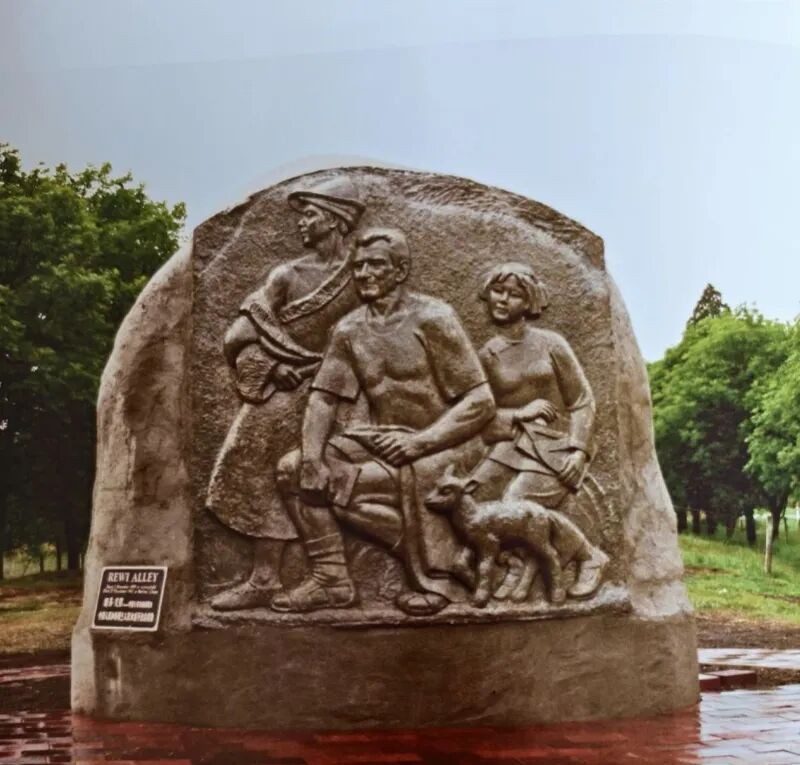
On 27 December 1987, Rewi Alley died in Beijing. Today, in Shandan, a small town in the Hexi Corridor, Alley has become the name of a road, and there is a memorial hall named after him as well.
A passage Alley wrote about 40 years ago also answers the question of how the Long March is linked to China’s great changes: “It is the spirit that sprouted among the people and was carried forward in the Long March, the War of Resistance and the War of Liberation that has created a miracle rarely seen in modern times. This spirit, born in the old liberated areas and rooted throughout the country, is where the hope of today’s China lies.”
Rewi Alley also built a bridge of friendship between the people of China and the people of New Zealand. In August 2025, an exhibition of photographs, “Rewi Alley and Other New Zealand Friends and the Chinese People’s War of Resistance Against Japanese Aggression”, opened in Auckland, New Zealand’s largest city. Through 80 precious historical photographs, pictures and works of art, it vividly brought back the moving story of how Rewi Alley and other New Zealand friends supported China’s war of resistance, and showed the deep friendship of the Chinese and New Zealand peoples, who stood shoulder to shoulder and helped one another in the world war against fascism.
In January this year, the Rewi Alley Memorial Hall in Christchurch, the largest city on New Zealand’s South Island, held a promotional event. “Alley folded his personal ideals into China’s revolution, development and national construction, and showed a sincere friendship that rises above national borders, cultures and differences of system,” said He Ying, then Chinese Consul-General in Christchurch.
Reported by Southern Metropolis Daily (nddaily) for “The Long March Illuminates the World”
Chief planners: Rong Mingchang, Liu Jiangtao
Executive planner: Wang Jia
Coordinating editor: Xiang Xueni, N Video
Lead writer: Ma Hui, N Video
Reported and written by Ma Hui and Liu Shiyang from Beijing and Shanghai
Video: Liang Zishan, Liu Shiyang, Ma Hui
Source: Southern Metropolis Daily (N Video), “The Long March Illuminates the World”, 27 October 2026 | By Ma Hui and Liu Shiyang
Reproduced with the permission of Southern Metropolis Daily (29 October 2026). This is an authorised reprint, not a compiled summary.
MiDeer Observer, China-New Zealand insight for New Zealand business, mideer.org
Disclaimer: This article is compiled from publicly available sources for general information only. The analysis and commentary are editorial opinions. MiDeer Observer does not guarantee the accuracy or completeness of the information provided. Readers should seek independent professional advice before relying on this content, or contact us for more information.