
Summary
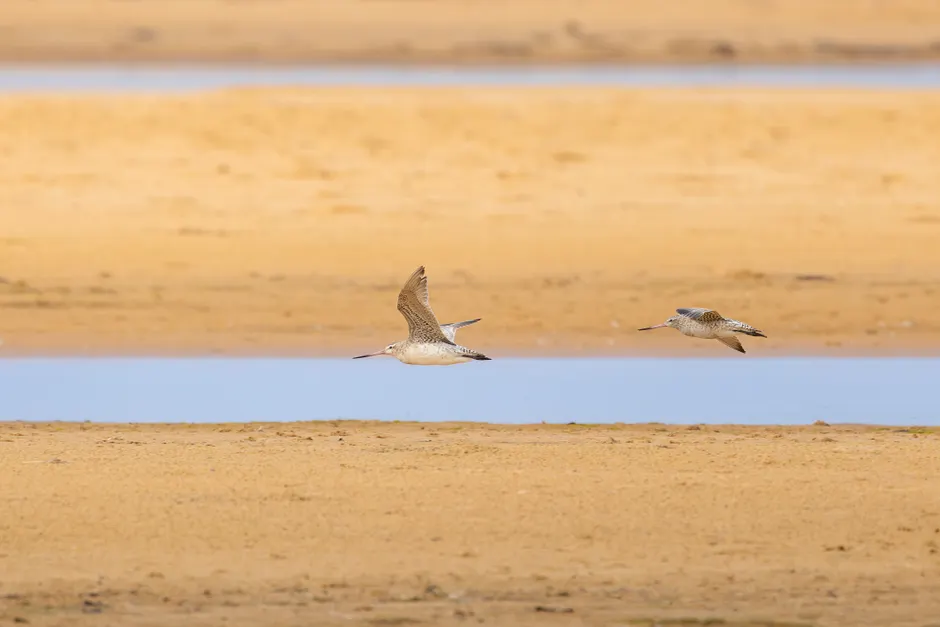
The bar-tailed godwit — the shorebird that holds the record for the longest non-stop flight of any bird — leaves New Zealand and Australia each March, flying more than 10,000 kilometres without a break to reach coastal wetlands in China. It stages there for one to two months to feed and refuel, then continues to breeding grounds in the Russian Far East or Alaska. In autumn it crosses the Pacific again, returning to the Southern Hemisphere to complete a loop of some 30,000 kilometres.
The Yalu River estuary wetland in Dandong, Liaoning province, sits at the northernmost end of the Yellow Sea ecoregion and covers almost 100,000 hectares. Its rich benthic life draws the species in large numbers: monitoring has recorded up to 60,000 bar-tailed godwits staging there at one time, about one-third of the global population. Birds arrive weighing just 200 to 300 grams and can build up to 500 to 600 grams after several weeks of feeding.
Lei Guangchun, a professor at Beijing Forestry University, said the bar-tailed godwit uses its long, slender, slightly upturned bill to feed on sandworms buried deep in the mud. In recent years, local authorities have enforced the Regulations on the Administration of the Dandong Yalu River Estuary Wetland National Nature Reserve, run programmes to return farmland and aquaculture ponds to wetland, and carried out a 'Blue Bay' action. The number of bird species recorded there rose from 250 in 2010 to 324 in 2021.
In 2024, the second phase of China's Yellow Sea (Bohai Sea) migratory bird habitat was inscribed on the World Heritage List, with the Yalu River estuary included as a key site. It is the world's first natural World Heritage site dedicated to migratory bird flyways. At the other end of the route lies the Pukorokoro Miranda reserve in New Zealand.
In 2002, researchers from the two countries used coloured flags fitted at each location to confirm for the first time the ecological link between the northern staging ground and the southern wintering ground. In 2004, the Yalu River estuary wetland and the Miranda reserve became sister reserves and signed a memorandum of international cooperation. Last September, the two sides renewed their Memorandum of Understanding, extending a partnership of more than 20 years and deploying satellite tracking and smart monitoring equipment to map the birds' flight paths.
Clare Fearnley, a former New Zealand ambassador to China, said the sister-reserve relationship sets a model for international cooperation on migratory bird conservation.
Commentary
Each year, the flight of bar-tailed godwits from New Zealand's Miranda reserve to the wetlands of China's Yellow Sea and Bohai Sea rim lifts conservation cooperation between the two countries to a new level. For New Zealand small and medium-sized enterprises, this 'bird highway' is more than an environmental story. It also conceals niche market opportunities.
Birdwatching tourism generates about USD 10 billion a year worldwide and is growing at roughly 10 percent annually. New Zealand, a well-known birdwatching destination, attracts large numbers of international birders each year, with Chinese visitors making up a steadily rising share. Since the Yalu River estuary wetland in Dandong was listed as a World Natural Heritage site, Chinese birdwatching groups have taken a greater interest in the 'New Zealand-China migratory bird corridor'.
Smaller New Zealand tour operators could design trans-national eco-tourism products built around the bar-tailed godwit — viewing the wintering population at Miranda, for example, then linking to a spring stopover itinerary on China's Yellow Sea coast. The market, however, is limited in size and depends heavily on specialist guiding and coordinated access to protected areas, so any return on investment needs careful assessment. Separately, the satellite tracking and smart identification technology used in the sister-reserve partnership offers New Zealand environmental technology firms a potential opening to conduct joint research and development with Chinese counterparts, or to supply technology.
But China invests heavily in building smart reserves, so New Zealand companies need to identify where they hold a genuine edge — whether in high-precision sensors or data analytics. More broadly, this kind of ecological diplomacy helps reinforce New Zealand's 'clean and green' national brand, which provides long-term support for the premium that dairy, honey and wine exports can command. The single count of 60,000 bar-tailed godwits at the Yalu River estuary — one-third of the global population — is a reminder to New Zealand exporters: Chinese consumers are becoming more attuned to ecological traceability and environmental storytelling.
Tying a product to a specific conservation outcome may prove more effective than a generic green label.
Keywords: bar-tailed godwit, Yalu River estuary wetland, migratory bird migration, China-New Zealand cooperation, sister reserves, World Natural Heritage, Miranda reserve, East Asian-Australasian Flyway, wetland conservation, Yellow Sea ecoregion
Summary in Chinese | 摘要
斑尾塍鹬是创下鸟类不间断飞行纪录的鸻鹬类水鸟,每年3月从新西兰、澳大利亚启程,连续飞行逾万公里抵达中国沿海湿地,停留一至两个月觅食补给,随后继续飞往俄罗斯远东或美国阿拉斯加繁殖,秋季再跨越太平洋返回南半球,构成长达三万公里的环形迁徙路线。辽宁丹东鸭绿江口湿地地处黄海生态区最北端,面积近10万公顷,底栖生物丰富,监测显示最多时有6万只斑尾塍鹬同时在此停歇,其种群数量占全球的三分之一;斑尾塍鹬到达时体重仅二三百克,经数周补给可增至五六百克。北京林业大学教授雷光春介绍,斑尾塍鹬喙细长微翘,以深埋淤泥的沙蚕为食。
近年来当地实施《丹东鸭绿江口湿地国家级自然保护区管理条例》,开展退耕还湿、退养还湿和“蓝色海湾”行动,鸟类种类从2010年的250种增加到2021年的324种;2024年中国黄(渤)海候鸟栖息地世界自然遗产第二期申遗成功,鸭绿江口作为关键节点列入《世界遗产名录》,这是全球首个以候鸟迁飞为主题的世界自然遗产。迁徙路线另一端是新西兰普科罗科罗米兰达保护区,2002年中新科研人员通过两地佩戴的专属旗标首次证实“北迁补给地”与“南半球越冬地”的生态关联,2004年鸭绿江口湿地与米兰达保护区缔结为姊妹保护区并签订国际合作备忘录,去年9月双方更新签署《谅解备忘录》,延续二十余年合作,并采用卫星追踪技术与智能监控设备掌握候鸟飞行路线。新西兰前驻华大使傅恩莱表示,两地结为姊妹保护区为国际候鸟保护合作树立了典范。
Commentary in Chinese | 评论
斑尾塍鹬每年从新西兰米兰达保护区到中国黄渤海湿地的迁徙,将两地生态保护合作推向新高度。对新西兰中小企业而言,这条“鸟道”不仅是环境议题,也潜藏细分市场机会。全球观鸟旅游年产值约百亿美元,且以每年10%左右速度增长;新西兰作为世界知名观鸟目的地,每年吸引大量国际观鸟者,其中中国游客占比逐步上升。
丹东鸭绿江口湿地列入世界自然遗产后,中国观鸟群体对“新西兰-中国候鸟走廊”兴趣增加,新西兰中小旅游运营商可设计以斑尾塍鹬为主题的跨国生态旅游产品,例如在米兰达保护区观赏越冬种群,再衔接中国黄渤海春季迁徙停歇地行程。不过,这一市场容量有限,且高度依赖专业导览和保护区准入协调,需谨慎评估投资回报。另一方面,中新姊妹保护区合作中采用的卫星追踪、智能识别等环境监测技术,为新西兰环保科技企业提供了与中国同行联合研发或技术输出的潜在接口;但中国在智慧保护区建设上投入较大,新西兰企业需找准自身在高精度传感器或数据分析方面的差异化优势。
从更宏观视角看,此类生态外交有助于巩固新西兰“纯净绿色”国家品牌,这对乳制品、蜂蜜、葡萄酒等出口产品的溢价能力具有长期支撑。鸭绿江口单次观测到6万只斑尾塍鹬、占全球三分之一的事实,提醒新西兰出口商:中国消费者对生态溯源和环境故事的敏感度正在提高,将产品与具体保护成果挂钩,可能比通用环保标签更有效。
关键词: 斑尾塍鹬, 鸭绿江口湿地, 候鸟迁徙, 中新合作, 姊妹保护区, 世界自然遗产, 米兰达保护区, 东亚—澳大利西亚候鸟迁飞通道, 湿地保护, 黄海生态区
Source: Baidu Search
Disclaimer: This article is compiled from publicly available sources for general information only. The analysis and commentary are editorial opinions. MiDeer Observer does not guarantee the accuracy or completeness of the information provided. Readers should seek independent professional advice before relying on this content, or contact us for more information.
免责声明:本文基于公开信息编译,仅供一般性参考。文中分析与评论为编辑观点。MiDeer Observer 不对所提供信息的准确性或完整性作出保证。读者在依赖本文内容前,应寻求独立专业意见,或联系我们获取更多信息。