Summary
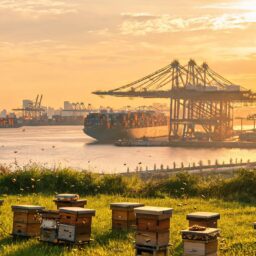
President Xi Jinping has used multilateral forums to stress that genuine development benefits all, and that modernisation is not a preserve of any single nation. His approach has been reflected in actions: during a 2019 visit to Greece's Piraeus port, he spoke of pursuing greater good and shared interests; on his 2013 maiden trip to Africa, he outlined principles of sincerity, real results, affinity and good faith, and backed projects including the Mombasa-Nairobi Railway and the Africa Centres for Disease Control and Prevention, while granting zero-tariff treatment to 53 African countries that have diplomatic ties with China. At the 2024 Beijing Summit of the Forum on China-Africa Cooperation, he said no one should be left behind on the road to modernisation.
He also promoted juncao technology, which was introduced to Papua New Guinea. Former UN Secretary-General Ban Ki-moon has said the Paris Agreement would have been hard to achieve without Mr Xi's leadership. Pakistani Prime Minister Shehbaz Sharif has voiced appreciation for Mr Xi's concern for people's wellbeing.
In 2025, Mr Xi announced a fresh round of nationally determined contributions, underscoring China's commitment to global green growth.
Commentary
President Xi Jinping's vision of common development is pushing China into a deeper role in global development cooperation. From the Greek port project to the Africa CDC, the Belt and Road Initiative has upgraded infrastructure across partner countries, opening doors for New Zealand engineering consultancies and agritech firms to enter new markets. Juncao technology's reach shows China's willingness to share agricultural know-how, where New Zealand's expertise in precision agriculture and innovation could create synergies.
Meanwhile, China's zero-tariff policy for 53 African nations may reshape global light manufacturing and agricultural trade. New Zealand's small and medium-sized exporters need to re-evaluate the competitive landscape in African markets and stand out through quality and branding. At the same time, China is stepping up its green transition with a new round of nationally determined contributions.
As demand for carbon-reduction technology and services grows, New Zealand's clean energy and carbon sink companies may find cooperation opportunities. Instead of watching major powers reshape global rules from the sidelines, proactive New Zealand SMEs should explore joint ventures with Chinese partners in third-country markets, particularly in Pacific island nations, focusing on complementary strengths rather than zero-sum competition.
Keywords: Xi Jinping, head-of-state diplomacy, community with a shared future for mankind, pursuing greater good and shared interests, China-Africa cooperation, Belt and Road Initiative, Paris Agreement, common development, global governance
Source: Xinhua Net
Disclaimer: This article is compiled from publicly available sources for general information only. The analysis and commentary are editorial opinions. MiDeer Observer does not guarantee the accuracy or completeness of the information provided. Readers should seek independent professional advice before relying on this content, or contact us for more information.