Summary
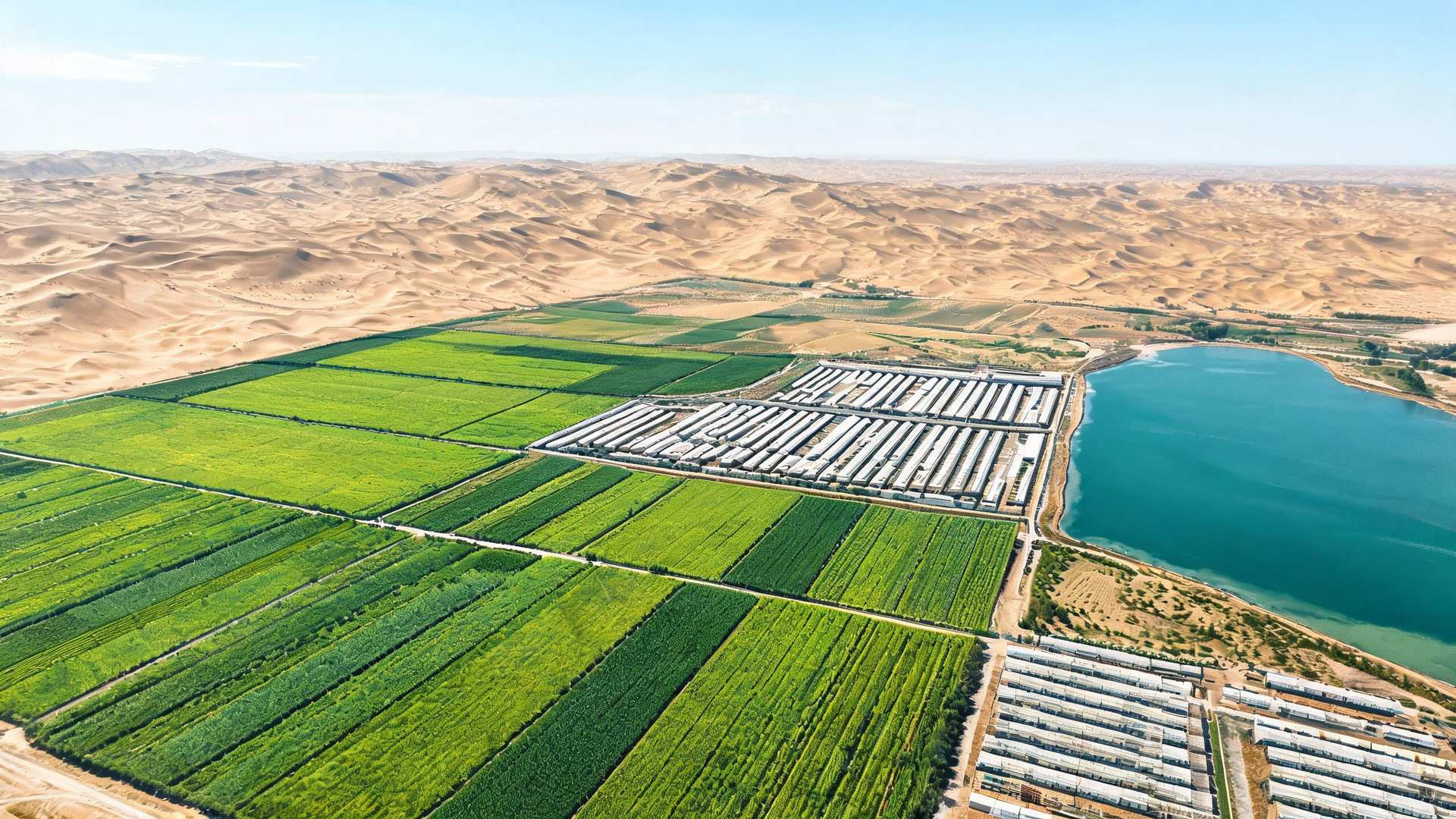
Veteran New Zealand dairy farmer Gavin Fisher, who has spent 27 years in the industry running a certified organic farm in the Waikato region of the central North Island, joined a 10-person delegation organised by a New Zealand agency and the International Federation of Organic Agriculture Movements Asia to visit a large-scale dairy operation with 100,000 cows on the edge of the Ulan Buh Desert in Inner Mongolia. The delegation toured one organic unit, which houses two 90-bail rotary milking platforms in a large barn and milks 8,500 cows. The herd consists of Holstein-Friesian cows of Australian bloodlines, milked three times a day with equipment running 24 hours, producing an average of about 43 litres per cow per day.
The farm employs dedicated nutritionists and veterinarians, keeps lactating cows indoors year-round, delivers harvested alfalfa and corn silage directly to the barn for feeding, and has calf-rearing facilities. The barn uses a fully temperature-controlled system to cope with desert temperatures that range from minus 20 degrees Celsius in winter to 40C in summer. The unit operates with just 50 shift workers, and apart from attaching milking cups manually, all processes are automated.
The farm relies on solar power, and most work vehicles are electric. Fisher said that through solid-liquid separation technology, manure is converted into compost and liquid nutrients, while biogas is used for on-site production, creating an efficient self-circulating ecosystem that can operate independently of the external power grid. Some land at the site is used for commercial crops, including pumpkins and liquorice, with irrigation water drawn mainly from the nearby Yellow River.
The desert development uses grid planting of nearly 100 million trees and grasses to block wind and sand erosion, and surplus sand from the construction phase is sold externally as road-building material. Fisher said the project involved not only substantial investment but also thorough thinking and attention to detail, demonstrating capacity for large-scale expansion, and New Zealand can learn from it — the key is to take action.
Commentary
The 100,000-cow operation on the edge of the Ulan Buh Desert in Inner Mongolia showcases the limits of scale and intensification, with fully temperature-controlled barns, 90-bail rotary milking platforms and 50 staff managing 8,500 cows. For small and medium-sized New Zealand dairy processors, it is not just a technical benchmark but a signal that the logic of global dairy competition is shifting: China is moving from being the largest import market towards partial self-sufficiency and could export cost-effective farming solutions in return. New Zealand dairy exports account for about 30 percent of the global total, and China is its largest single market, but China's dairy imports fell 12 percent in 2023 while domestic raw milk output rose 6.7 percent, narrowing the supply-demand gap.
If China replicates this desert dairy model, New Zealand's milk powder and liquid milk exports to China could face substitution pressure. However, New Zealand's competitive advantage lies in grass-fed, organic and animal welfare standards, which are difficult to replicate in China's indoor high-density farming. The self-circulating ecosystem Fisher described depends on huge capital investment and cheap land, and New Zealand farmers should focus on how to combine automation with their own pastoral systems rather than copying the model.
Chinese dairy companies such as Yili and Mengniu have already invested in building plants in New Zealand and may in future export the technical experience of desert dairy farms back, further integrating supply chains. NZ SMEs could explore providing professional services to China such as organic certification and carbon footprint accounting, or develop low-cost automation equipment suitable for small farms, seeking new growth points through differentiation.
Keywords: New Zealand dairy farmer, China dairy industry, Ulan Buh Desert, 100,000 cows, rotary milking platform, organic farm, self-circulating ecosystem, Gavin Fisher
Summary in Chinese | 摘要
新西兰资深奶农加文·费舍尔从事乳业27年,在新西兰北岛中部怀卡托地区经营一家认证有机牧场。他参加由新西兰相关机构和国际有机农业亚洲联盟共同组织的10人考察团,走进中国内蒙古乌兰布和沙漠边缘一个拥有10万头奶牛的大型养殖基地。考察团参观了其中一个有机养殖单元,该单元在大型牛舍内设置两套90位转盘挤奶台,为8500头奶牛挤奶。
牧场饲养有澳大利亚血统的黑白花奶牛,每日挤奶3次,设备24小时不间断运行,平均产奶量约每头每天43升。牧场配有专职营养师与兽医,泌乳奶牛全年室内饲养,苜蓿、玉米等饲草料收割后直接运送至牛舍喂食,并设有犊牛饲养设施。牛舍采用全温控系统,应对沙漠地区冬季零下20摄氏度、夏季40摄氏度的气温。
该养殖单元仅50名轮班工作人员,除挤奶杯佩戴需人工操作外其余均为自动化。牧场依靠太阳能供电,大部分作业车辆为电动设备。费舍尔称,依托固液分离技术,粪便被转化为堆肥和液态养分,沼气用于场内生产,构建起高效自循环生态系统,可脱离外部电网独立运行。
基地内部分土地用于商业作物种植,包括南瓜和甘草,灌溉水源主要取自附近黄河。沙漠开发中网格化种植近亿株树木与草本植物阻挡风沙侵蚀,牧场建设阶段富余沙土对外出售用作道路基建原料。费舍尔表示,项目除大量投资外还投入充分思考和细节考量,展现了规模化扩张能力,新西兰可以从中汲取经验,关键在于付诸行动。
Commentary in Chinese | 评论
中国内蒙古乌兰布和沙漠边缘的这座10万头奶牛基地,以全温控牛舍、90位转盘挤奶台和50人管理8500头奶牛的自动化水平,展示了规模化与集约化的极限。对新西兰中小乳企而言,这不仅是技术标杆,更意味着全球乳业竞争逻辑的转变:中国正从最大进口市场转向部分自给,并可能反向输出高性价比的养殖方案。新西兰乳制品出口占全球约30%,中国是其最大单一市场,但2023年中国乳制品进口量下降12%,国内原奶产量却增长6.7%,供需缺口收窄。
若中国复制此类沙漠牧场模式,新西兰对华出口的奶粉、液态奶可能面临替代压力。不过,新西兰的竞争优势在于草饲、有机和动物福利标准,这些是中国室内高密度养殖难以复制的。费舍尔提到的自循环生态系统,依赖巨额资本投入和廉价土地,新西兰牧场主更应关注如何将自动化与自身放牧体系结合,而非照搬模式。
中国乳企如伊利、蒙牛已在新西兰投资建厂,未来可能将沙漠牧场的技术经验反向输出,进一步整合供应链。NZ SME可探索向中国提供有机认证、碳足迹核算等专业服务,或开发适合小型牧场的低成本自动化设备,在差异化中寻找新增长点。
关键词: 新西兰奶农, 中国乳业, 乌兰布和沙漠, 10万头奶牛, 转盘挤奶台, 有机牧场, 自循环生态系统, 加文·费舍尔
Source: Sina.com
Disclaimer: This article is compiled from publicly available sources for general information only. The analysis and commentary are editorial opinions. MiDeer Observer does not guarantee the accuracy or completeness of the information provided. Readers should seek independent professional advice before relying on this content, or contact us for more information.
免责声明:本文基于公开信息编译,仅供一般性参考。文中分析与评论为编辑观点。MiDeer Observer 不对所提供信息的准确性或完整性作出保证。读者在依赖本文内容前,应寻求独立专业意见,或联系我们获取更多信息。