Summary
Following World War II, Allied powers systematically pursued justice for Japanese wartime atrocities through the Tokyo Trial and Class B and C war crimes tribunals across the Asia-Pacific. The proceedings ran from the 1945 Manila trial of Tomoyuki Yamashita to the 1951 Australian trials, spanning five and a half years. In that period, 2,244 trials were held and roughly 5,700 people prosecuted; 984 received death sentences.
The tribunals held Japan accountable for atrocities in China, Singapore, the Philippines and beyond, including the Sook Ching massacre in Singapore – officially estimated at about 5,000 deaths, though the true figure may have been between 25,000 and 50,000 – the killing of 300 French prisoners of war at Lang Son, and the Hanaoka incident. Courts applied international law to punish offenders and enshrined the principle of individual criminal responsibility for war crimes. Yet the onset of the Cold War and American interference left this reckoning incomplete, with many war criminals released early.
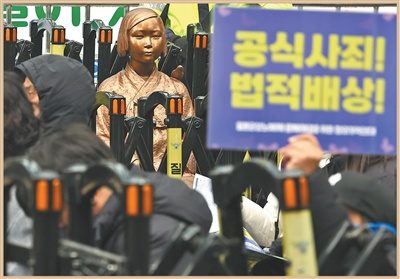
Japan's right-wing forces still deny historical facts such as the Nanjing Massacre and the forced recruitment of 'comfort women', promoting the fallacy of 'victors' justice'. Scholars and legal experts maintain that the trials were fair and the historical truth incontrovertible, urging Japan to reflect sincerely on its wartime aggression and uphold the post-war international order. Remembering history and safeguarding peace require firm opposition to historical nihilism to ensure such tragedies never recur.
Commentary
Post-war multinational trials cemented an international legal consensus: aggression is criminal and atrocities must be punished. But the reckoning was incomplete, disrupted by Cold War politics, allowing Japan's right wing to continue denying the Nanjing Massacre and other historical realities, unsettling East Asia's political and economic landscape. For New Zealand SMEs, Japan remains a key export market, with two-way goods trade at NZ$8.7 billion in 2023.
Major exporters such as Fonterra and Silver Fern Farms have deep ties to Japan's premium food supply chains. However, rising nationalism could lead to consumer boycotts or non-tariff barriers, as seen in the 2019 Japan–South Korea trade friction; businesses should stay alert to political risk spilling into commerce. The trials also established the command responsibility principle, which has extended into modern supply-chain human rights due diligence, potentially raising compliance costs for NZ exporters expanding across the Asia-Pacific.
Historical revisionism in Japan is not just a moral issue but a source of uncertainty for regional economic integration. NZ businesses should strengthen market diversification, build resilient networks in emerging markets such as Southeast Asia, and integrate compliance screening into partner selection to manage potential volatility.
Keywords: war crimes, Class B and C war crimes tribunals, Tokyo Trial, Japanese wartime atrocities, historical revisionism, comfort women, Nanjing Massacre, international law, post-war order, historical reckoning

Source: Global Times
Disclaimer: This article is compiled from publicly available sources for general information only. The analysis and commentary are editorial opinions. MiDeer Observer does not guarantee the accuracy or completeness of the information provided. Readers should seek independent professional advice before relying on this content, or contact us for more information.