Summary
New Zealand's forestry exports are forecast to reach NZ$1.672 billion in the first half of 2026, up 2 percent year on year, but continued weakness in construction activity in core overseas markets, particularly China, is weighing heavily on log demand. A wood market report from PF Olsen, a New Zealand forestry management and log marketing firm, said log CFR prices are under downward pressure as demand from China's furniture and construction sectors remains soft, and NZ exporters are progressively abandoning the furniture-grade log premium they have long maintained. NZ log exports to China fell 1.671 percent year on year to 1.670 million cubic metres in May 2026, down 8.5 percent month on month, while export value fell 5 percent year on year to US$192 million, according to the report.
The average price per cubic metre rose 4 percent, driven by higher fuel and shipping costs. In the first five months, NZ log exports to China fell 5.7 percent year on year, with the average price down 3.4 percent. In the 2026 Budget, the government did not provide direct subsidies or dedicated funding to forestry exporters, as it targets a budget surplus in FY2028/29.
On a positive note, the government has allocated more than NZ$1.6 billion for KiwiRail network upgrades and key freight corridor road improvements between 2027 and 2030. It proposes cutting the annual ETS fee for post-1989 forest land from NZ$14.90 per hectare to NZ$10.25, a cumulative reduction of 66 percent since the National Party took office, with the new rate expected to take effect in mid-2026. Following the formal signing of the New Zealand-India free trade agreement, the New Zealand Timber Industry Federation (NZTIF) said Indian buyer inquiries have increased noticeably.
However, higher employment costs taking effect in April 2026 are hitting local forestry firms: the minimum hourly wage has risen to NZ$23.95, the minimum employer KiwiSaver contribution has increased from 3 percent to 3.5 percent, and the ACC employer levy rate has risen from 1.67 percent to 1.75 percent, with a further increase due in 2028.
Commentary
China is New Zealand's largest log export market, and soft demand from its construction and furniture sectors is directly hitting NZ forestry exports. Log export volumes to China fell 8.6 percent year on year in May 2026; although the average price rose 4 percent on higher shipping costs, export value still fell 5 percent, reflecting a significant contraction in demand. NZ exporters abandoning the furniture-grade log premium signals that Chinese buyers have become more price-sensitive and are turning to more cost-competitive sources such as European spruce or South American radiata pine.
This puts profit pressure on North Island radiata pine growers and small to medium sawmills that rely on the Chinese market, forcing them to reassess product mixes or shift to relatively stable segments such as lower-grade logs and pulpwood. At the same time, the signing of the NZ-India FTA offers the industry a potential alternative export channel. India's construction sector is growing rapidly, but its current log import scale is far smaller than China's and its price and specification requirements differ, making it difficult to fully fill the gap left by weaker Chinese demand in the short term.
NZ small and medium enterprises should pay attention to certification requirements, logistics costs and payment risks in the Indian market, and assess entry costs cautiously. On domestic policy, the government has not provided direct subsidies, but NZ$1.6 billion in rail and road investment is expected to reduce transport costs from central North Island forests to ports and improve supply chain reliability. The 66 percent cut in ETS fees will ease compliance burdens for forest landholders and may encourage more forest land into the production cycle, though it will take several years to translate into log supply.
Rising employment costs (minimum wage, KiwiSaver, ACC levies) will significantly affect labour-intensive forestry harvesting and processing, potentially accelerating automation; SMEs need to weigh short-term costs against long-term efficiency investment. Overall, under the dual pressure of weak Chinese demand and rising costs, NZ forestry exporters need to accelerate market diversification while using improved domestic logistics and carbon policy benefits to optimise cost structures. India holds potential but is unlikely to become a major growth engine in the short term; firms should remain cautiously optimistic.
Keywords: log exports, weak Chinese demand, PF Olsen, furniture-grade log premium, New Zealand forestry, ETS fees, KiwiRail, New Zealand-India FTA, employment costs
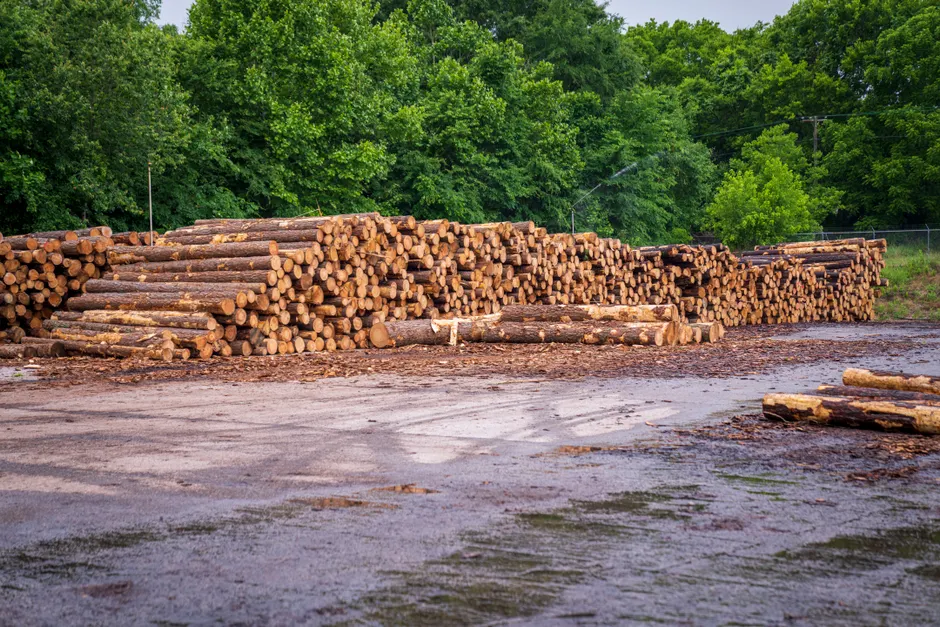
Photo by Mark Stebnicki on Pexels
Source: Sdlycyw
Disclaimer: This article is compiled from publicly available sources for general information only. The analysis and commentary are editorial opinions. MiDeer Observer does not guarantee the accuracy or completeness of the information provided. Readers should seek independent professional advice before relying on this content, or contact us for more information.