Summary
New Zealand covers about 270,000 square kilometres and has a population of about 5.342 million (December 2025), according to a country profile published on the website of the Economic and Commercial Office of the Chinese Embassy in New Zealand. As of 2023, people of European descent made up 67.8 percent of the population, Māori 17.8 percent, Asian 17.3 percent (including 5.6 percent Chinese), and Pacific peoples 8.9 percent. The official languages are English and Māori.
The capital is Wellington, where average temperatures are around 16°C in summer and 8°C in winter. The head of state is King Charles III of the United Kingdom. Governor-General Cindy Kiro took office in October 2021 for a five-year term.
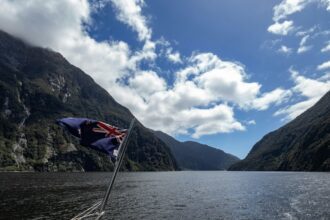
Waitangi Day, 6 February, is the national day. New Zealand lies in the south-west Pacific, separated from Australia by the Tasman Sea, about 1,600 kilometres to the west. Mountains and hills account for more than 75 percent of the land area.
Aoraki/Mount Cook in the South Island, at 3,754 metres, is the highest peak. The coastline is about 15,000 kilometres long, and the climate is temperate maritime. Māori settled in New Zealand from 1350.
On 6 February 1840, Britain signed the Treaty of Waitangi with Māori chiefs. New Zealand became a British dominion in 1907 and a sovereign state and member of the Commonwealth in 1947. New Zealand has no written constitution.
Parliament is unicameral. The current 54th Parliament, formed in December 2023, has 123 seats: National 49, Labour 34, Green 15, ACT 11, New Zealand First 8, Māori Party 4, and 2 independent members. The Speaker is Gerry Brownlee.
In November 2023, National, ACT and New Zealand First formed a coalition government, with National leader Christopher Luxon as Prime Minister.
Commentary
New Zealand is a mature economy in the South Pacific, and changes in its political landscape and population structure have a direct bearing on China-New Zealand trade and economic ties. After the 2023 election, National, ACT and New Zealand First formed a centre-right coalition government. Since taking office, Prime Minister Luxon has continued a pragmatic trade approach towards China, but New Zealand First's nationalist leanings could add uncertainty to the bilateral relationship.
New Zealanders of Chinese descent make up 5.6 percent of the population, about 300,000 people, and this group plays a bridging role in cross-border trade, tourism and education services. NZ small and medium-sized enterprises can use the local networks of the Chinese community to lower the cultural barriers to entering the Chinese market. By industry, New Zealand's economy relies heavily on primary sector exports.
Dairy products, meat, wood and fruit account for more than 70 percent of exports to China, and co-operative-style companies such as Fonterra and Zespri dominate supply chains. Since the upgraded China-New Zealand free trade agreement, tariffs on New Zealand dairy products, beef and lamb and other goods have been largely eliminated, but non-tariff barriers such as registration approval and inspection and quarantine standards remain major obstacles for small and medium-sized exporters. China is currently promoting domestic demand growth and green transition.
New Zealand has differentiated advantages in functional dairy products, plant-based foods and carbon-certified wood, but needs to watch competition from similar Australian products. The coalition government's tighter immigration policy could affect the supply of seasonal labour, pushing up production costs in horticulture and dairy and squeezing export profits. For NZ SMEs, monitoring consumer segmentation trends in Chinese regional markets and using e-commerce platforms and bonded warehouse models to test new products makes it easier to control risks than relying on traditional bulk trade.
Keywords: New Zealand country profile, China-New Zealand relations, Chinese Embassy in New Zealand, Treaty of Waitangi, Luxon, parliamentary election, Māori, Wellington
AI illustration on MiDeer Observer
Source: Ministry of Commerce of the People's Republic of China
Disclaimer: This article is compiled from publicly available sources for general information only. The analysis and commentary are editorial opinions. MiDeer Observer does not guarantee the accuracy or completeness of the information provided. Readers should seek independent professional advice before relying on this content, or contact us for more information.