Summary
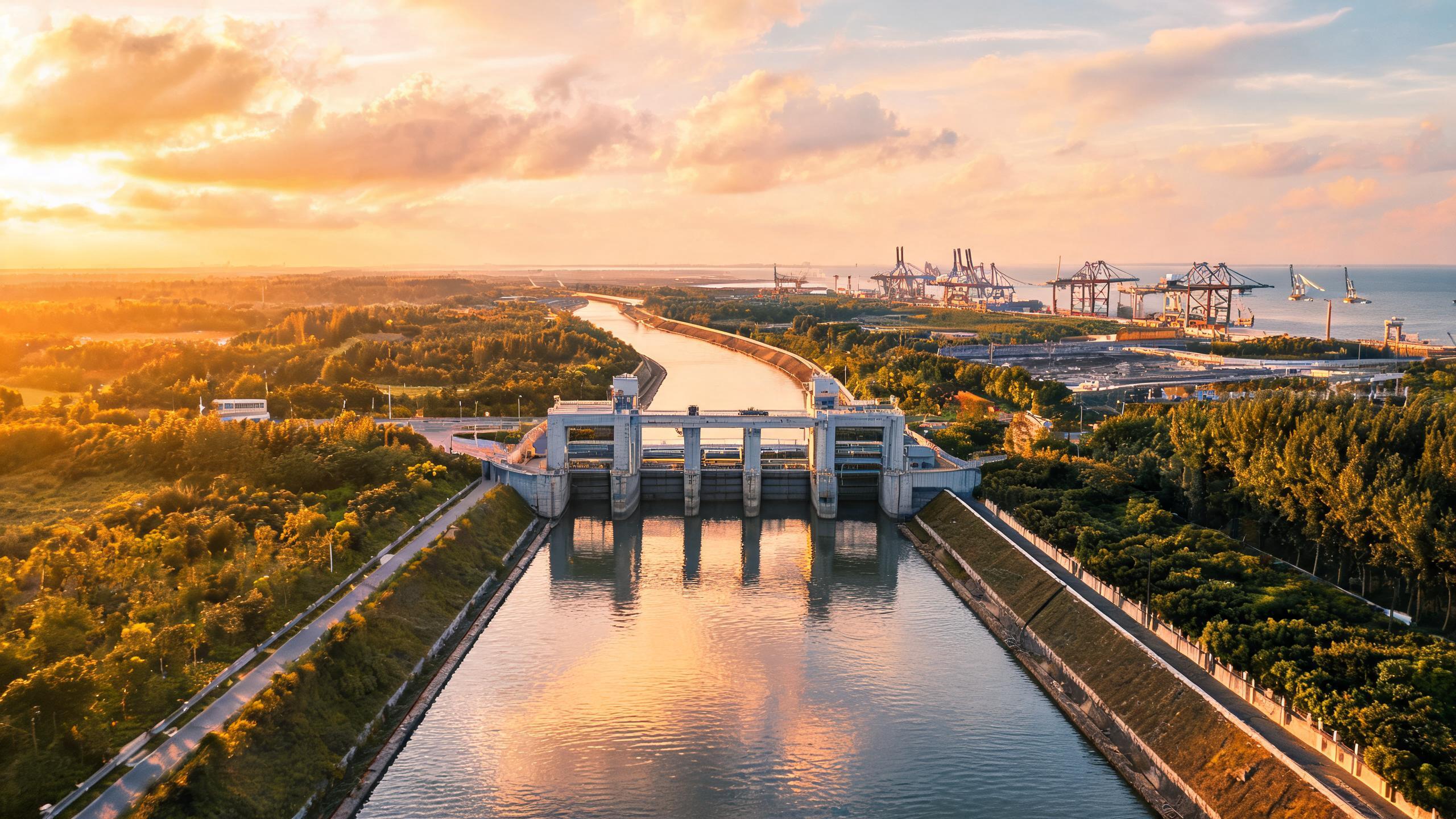
The 134.2km Pinglu Canal, designed for 5,000-tonne vessels, is China's highest navigable class canal. Construction began in August 2022 and is scheduled to open in September 2025. In December 2023, President Xi Jinping urged high-standard, high-quality construction during his inspection of Guangxi.
The canal is part of national plans including the Master Plan of the New Western Land-Sea Corridor, with total investment exceeding 72 billion yuan. The main structures of its three hubs are now complete, and the entire waterway became operational in early June. The Madou hub features the world's largest inland water-saving ship lock under construction, with a maximum head of 29.6 metres, saving over 60% of water—an estimated 1 billion cubic metres annually.
Yan Qiang, head of the science and technology information department at Pinglu Canal Group, said this is China's first full-lifecycle smart canal construction platform. Hu Ya'an, an academician of the Chinese Academy of Engineering, noted that the record-breaking engineering indicators are underpinned by numerous technological innovations. Guangxi is developing a 'leaf-vein-style' seaward industrial layout centred on the Pinglu Canal economic belt, with cities like Nanning, Qinzhou, and Beihai leveraging local advantages.
The canal adopts a full-lifecycle digital management model, with about 313 million cubic metres of earth and rock excavated, and a comprehensive utilisation rate exceeding 98%. The fishway monitoring system at the Qingnian hub has recorded over 23,000 upstream fish and 33,000 downstream fish. Once completed, the canal will shorten the sea route for goods from southwest China by more than 560km compared to passing through Guangzhou.
Commentary
The Pinglu Canal, as a direct river-sea link connecting the Xijiang River with the Beibu Gulf, is reshaping export routes for southwest inland China. For New Zealand SMEs reliant on western Chinese markets, the canal's opening will cut logistics costs and boost the attractiveness of inland consumer centres like Chengdu and Chongqing for NZ dairy, meat, and high-value processed foods. NZ firms can leverage the Beibu Gulf port's established RCEP shipping network to develop multimodal routes via Qinzhou and the canal to the southwest, replacing long-distance road transport from eastern ports—particularly beneficial for time-sensitive chilled goods.
However, improved corridor efficiency will also allow ASEAN agricultural and processed food products to flow more easily into western China, intensifying competition in price-sensitive categories. NZ exporters must accelerate differentiation through organic, grass-fed, and traceable positioning to maintain premium pricing amid southwest's consumption upgrade. Guangxi has already positioned high-end papermaking, green chemicals, and new energy materials along the canal economic belt, creating demand for specialised equipment, environmental technology, and supply chain management services—potential entry points for NZ tech and engineering SMEs.
The canal's full-lifecycle digital twin and intelligent scheduling system also signal coopetition opportunities for NZ smart logistics and IoT solution providers. While the opening of the southwest hinterland accelerates, regional protectionist policies and local supply chain development merit attention. NZ firms should consider joint ventures or alliances with local distributors to lower entry barriers.
The canal's expected annual water savings of 1 billion cubic metres and over 98% utilisation of excavated materials set a green engineering benchmark that may push China's water transport infrastructure towards stricter environmental standards, indirectly boosting demand for environmentally friendly technologies and products where New Zealand's clean-tech expertise can translate into concrete project engagement.
Keywords: Pinglu Canal, New Western Land-Sea Corridor, seaward economy, water-saving ship lock, smart canal, ecological protection, river-sea intermodal transport, high-quality development
Summary in Chinese | 摘要
平陆运河全长134.2公里,可通航5000吨级船舶,是国内通航等级最高的运河,于2022年8月开工建设,预计2025年9月通航。习近平总书记2023年12月考察广西时强调高标准高质量建设平陆运河。该运河被纳入《西部陆海新通道总体规划》等国家级规划,总投资超720亿元。
目前三大枢纽主体工程已完成,6月初全线通水。马道枢纽拥有世界在建最大的内河省水船闸,最大水头29.6米,省水超60%,年节水量约10亿立方米。平陆运河集团科技信息部部长闫强介绍,这是我国首个全生命周期智慧运河建设期平台。
中国工程院院士胡亚安指出,工程指标‘世界之最’背后是诸多科技创新支撑。广西以平陆运河经济带为主脉打造‘叶脉式’向海产业布局,南宁、钦州、北海等市因地制宜发展。运河采用全生命周期数字化管理模式,累计开挖土石方约3.13亿立方米,综合利用率超98%。
青年枢纽鱼道监测系统累计记录上行鱼类超2.3万尾、下行鱼类超3.3万尾。平陆运河建成后,西南地区货物经此出海比绕道广州港缩短560多公里。
Commentary in Chinese | 评论
平陆运河作为连通西江与北部湾的“江海直联”新通道,直接改写中国西南内陆的出海格局。对依赖中国西部市场的新西兰中小企业而言,运河通航后,西南地区货物经北部湾出海较绕道广州港缩短560多公里,物流成本下降将提升成都、重庆等内陆消费中心对新西兰乳制品、肉制品和高附加值食品的进口吸引力。新西兰企业可借力北部湾港已形成的RCEP航线网络,探索以海运直达钦州港再经运河转运至西南腹地的联运方案,替代传统华东港口陆运长距离配送,尤其适合对保鲜要求高的冷藏货物。
然而,通道效能释放也将加速东盟农产品、加工食品等经由同一路线涌入中国西部,在价格敏感型品类上与新西兰产品形成更直接竞争。新西兰出口商需加速向有机、草饲、可追溯等差异化定位倾斜,方能在西南消费升级中守住溢价空间。广西在运河经济带已提前布局高端造纸、绿色化工、新能源材料等临港产业,其对专用设备、环保技术及供应链管理服务的需求,为新西兰中小型科技和工程咨询企业提供了技术输出的潜在入口。
运河采用的全生命周期数字孪生和智能调度系统,亦表明中国基建数字化进程为新西兰智慧物流、物联网解决方案供应商带来合作窗口。西南地区腹地经济加速开放,但区域保护性政策和本地供应链培育同样值得留意,新西兰企业宜通过合资或与当地分销伙伴结盟降低准入壁垒。运河预计年节水量约10亿立方米、土石方综合利用率超98%,其绿色工程标准或推动中国水运基建向更严环保准则靠拢,这将间接提高对环境友好型技术和产品的需求,新西兰在清洁技术领域的经验可转化为具体项目参与。
关键词: 平陆运河, 西部陆海新通道, 向海经济, 省水船闸, 智慧运河, 生态保护, 江海联运, 高质量发展

Source: Xinhua News Agency
Disclaimer: This article is compiled from publicly available sources for general information only. The analysis and commentary are editorial opinions. MiDeer Observer does not guarantee the accuracy or completeness of the information provided. Readers should seek independent professional advice before relying on this content, or contact us for more information.
免责声明:本文基于公开信息编译,仅供一般性参考。文中分析与评论为编辑观点。MiDeer Observer 不对所提供信息的准确性或完整性作出保证。读者在依赖本文内容前,应寻求独立专业意见,或联系我们获取更多信息。