Summary
The China-Laos Biodiversity and Agricultural Product Transformation Symposium convened on 1 November 2026 at the Guangxi Institute of Botany. The institute co-hosted the event with Guangxi Minzu University and Savannakhet University of Laos, organising it through platforms including the ASEAN Research Institute, the China-New Zealand 'Belt and Road' Joint Laboratory Guangxi Centre, and the Guangxi Deciduous Fruit Tree Industry Innovation Team under the National Modern Agricultural Industry Technology System. Before the meeting, the Lao delegation toured the institute's Rare and Endangered Botanical Garden.
Professor Huang Gang, Executive Dean of the China-ASEAN Financial Innovation and Development Research Institute at Guangxi Minzu University and Deputy Director of its Laos Research Institute, introduced the guests and presented a research report on ASEAN fruit markets and cold-chain logistics development. Researcher Wang Faming, head of the China-New Zealand 'Belt and Road' Joint Laboratory Guangxi Centre and chief expert of the Guangxi Deciduous Fruit Tree Industry Innovation Team, outlined the institute's overall development, key research achievements and progress in building the joint laboratory's Guangxi Centre, and delivered a special analysis on China-Laos kiwifruit industry international cooperation, focusing on the feasibility and pathway for developing a kiwifruit industry in the mountainous areas of northern Laos. Speakers included Siwongxay Thongphan, Director-General of the Research and Development Department of the Central Organisation Commission of the Lao People's Revolutionary Party; Suthiphone Phomla, Deputy Director-General of the Organisation Department of the Central Organisation Commission; Bounthavy Chanthalasy, Head of the Forestry Division of the Savannakhet Provincial Department of Agriculture and Environment; and Somsay Rasphone, Director of the Biodiversity and Agricultural Product Research Centre at Savannakhet University.
The two sides reached several follow-up cooperation intentions, agreeing to advance practical cooperation in co-building and sharing germplasm resources, introducing and demonstrating improved varieties and technologies, exchanging research personnel, and conducting joint industry surveys. They will also explore a coordinated mechanism linking varieties, technology, cold chain and trade to help Guangxi's kiwifruit and other specialty agricultural products expand into ASEAN markets. Lao participants came from the Central Organisation Commission of the Lao People's Revolutionary Party, Savannakhet University, the National University of Laos and the Savannakhet Provincial Department of Agriculture and Environment.
Chinese participants included researchers from Guangxi Minzu University, Guangxi Normal University, Guilin Sanjin Pharmaceutical Co. , Ltd. and the Guangxi Institute of Botany.
Commentary
China-Laos cooperation in biodiversity and agricultural product transformation, built on platforms such as the China-New Zealand 'Belt and Road' Joint Laboratory Guangxi Centre, uses the kiwifruit industry as an entry point to explore specialty agriculture in the mountainous areas of northern Laos. New Zealand's kiwifruit industry, led globally by Zespri, offers a benchmark in variety rights protection and brand operation. If the cooperation succeeds in exporting Guangxi's low-chill kiwifruit varieties and technology, it could reshape the Southeast Asian kiwifruit market and pose potential competition to Zespri's Asia strategy.
At the same time, improvements in cold-chain logistics and trade corridors in Laos, an ASEAN member, may offer new routes for New Zealand agricultural products to enter southwestern China via Laos. New Zealand small and medium-sized enterprises should monitor the impact of this cooperation on regional supply chains, particularly whether exchanges of kiwifruit germplasm resources involve intellectual property risks, and how Laos as a low-cost production base could affect the global kiwifruit pricing system.
Keywords: China-Laos, biodiversity conservation, agricultural product transformation, kiwifruit industry, germplasm resources, Belt and Road, Guangxi Institute of Botany, Savannakhet University, scientific and technological cooperation
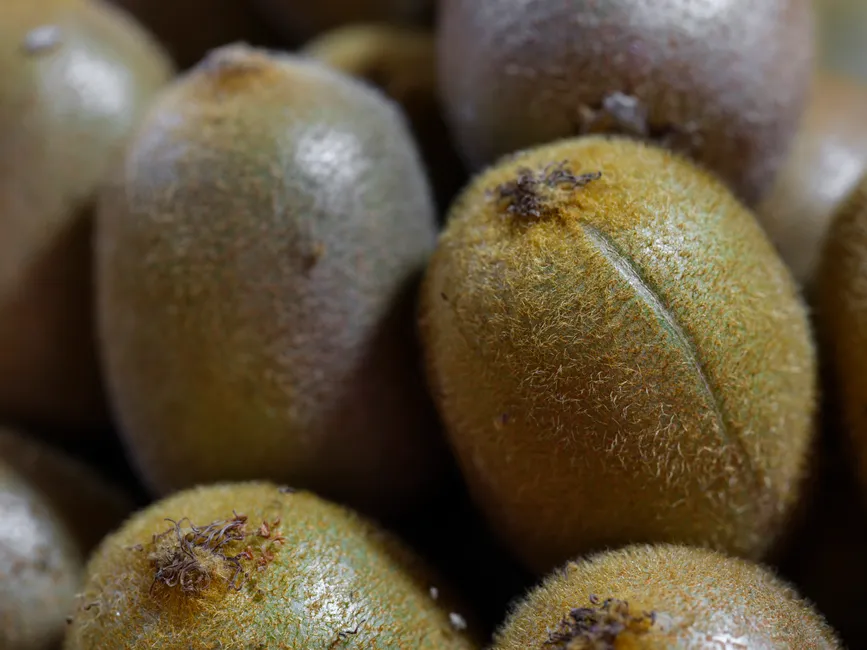
Photo by Engin Akyurt on Pexels
Source: Guangxi Institute of Botany
Disclaimer: This article is compiled from publicly available sources for general information only. The analysis and commentary are editorial opinions. MiDeer Observer does not guarantee the accuracy or completeness of the information provided. Readers should seek independent professional advice before relying on this content, or contact us for more information.