Summary
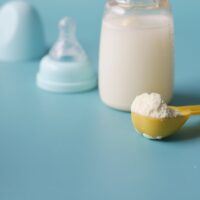
On 25 June 2024, China's State Administration for Market Regulation and New Zealand's Ministry for Primary Industries signed the Arrangement on Cooperation in Infant Formula Food Safety, aiming to enhance communication and collaboration in infant formula registration, ensure the quality and safety of formula exported to China, and facilitate bilateral trade. The arrangement leverages existing forums for technical discussions and exploration of further cooperation opportunities. China's annual pass rate for infant formula sampling inspections exceeds 99%, with continuous product quality improvement.
New Zealand is China's largest source of imported dairy products, with import value reaching NZ$18.58 billion in the first four months of this year. In 2023, New Zealand's dairy exports totalled NZ$26.008 billion, with China accounting for 35%. In terms of product mix, whole milk powder holds 69.3% of China's import share, cheese 59.9%, and cream 87%, but whole milk powder imports fell 26.5% year-on-year.
Independent dairy analyst Song Liang noted that New Zealand is adapting to changes in China's market demand, shifting from whole milk powder to high-value products such as butter, cheese, whey powder, and infant formula ingredients. Bai Wenxi, Vice Chairman of the China Enterprise Capital Alliance, believed the cooperation will promote exchanges in infant formula production, regulation, and testing, create a fair and transparent market environment, and help New Zealand companies grasp China's market demand and expand market share.
Commentary
This NZ-China infant formula cooperation arrangement directly affects you (New Zealand SME owners) through improved market access and reduced compliance costs. On one hand, the arrangement clarifies the registration communication mechanism, likely simplifying the approval process for infant formula exported to China and shortening the product launch cycle. On the other hand, technical exchanges under the Joint Committee on Food Safety may lead to more unified testing standards, reducing duplicate testing costs.
Notably, China's regulation of infant formula continues to tighten: the revised Administrative Measures for Registration of Infant Formula Formula Products in 2023 raised the entry bar, and this cooperation helps you adapt to policy changes in advance. In terms of market demand, Chinese consumers have strong demand for high-quality infant formula, but competition is fierce—the EU and US hold advantages in whey-based and infant formula segments, so New Zealand needs to strengthen differentiation, such as promoting grass-fed and organic features. Song Liang's signal on product restructuring is clear: whole milk powder imports are declining, while demand for cheese and butter is rising.
This means if you operate dairy processing, you could consider increasing supply of cheese and whey powder; if you are an exporter, monitor China's import policy changes for high-value ingredients like concentrated whey protein. The opportunity lies in possible brand mutual recognition pilots, allowing SMEs to leverage official endorsement for consumer trust; the risk is that compliance costs may squeeze margins if passed through the supply chain. In conclusion, this cooperation is not a silver bullet—its success depends on implementation details such as registration recognition timelines and coordination of technical standard differences.
Keywords: infant formula, food safety, NZ-China cooperation, registration, market access, trade facilitation, high-value products, market regulation

Source: NetEase
Disclaimer: This article is compiled from publicly available sources for general information only. The analysis and commentary are editorial opinions. MiDeer Observer does not guarantee the accuracy or completeness of the information provided. Readers should seek independent professional advice before relying on this content, or contact us for more information.